


Deemed important – News from the Alpine Salamander Competence Centre of Competence
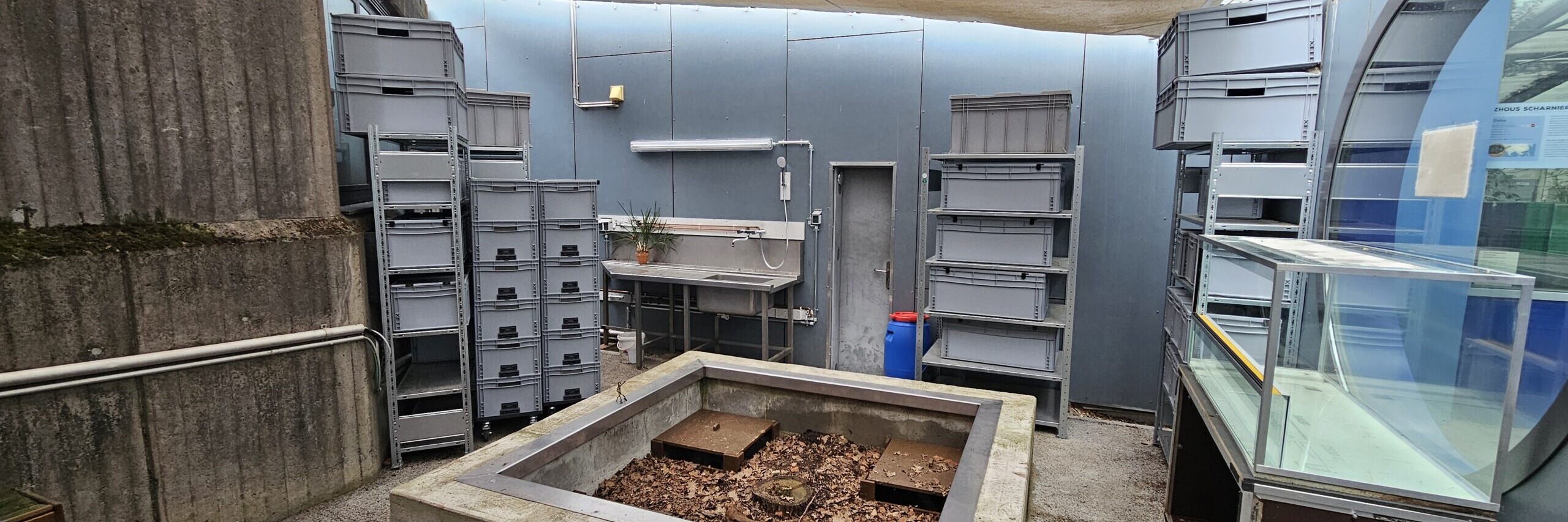
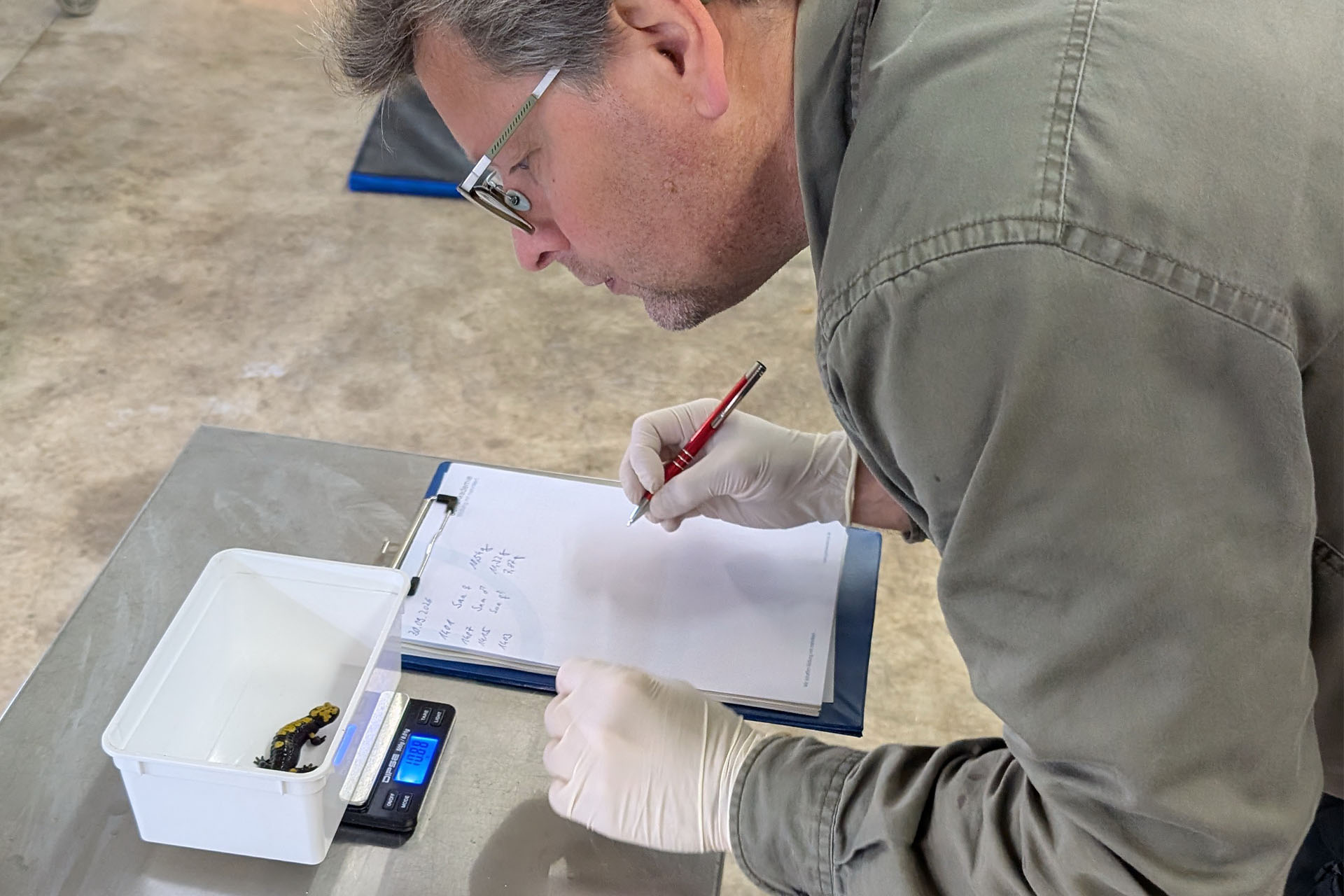
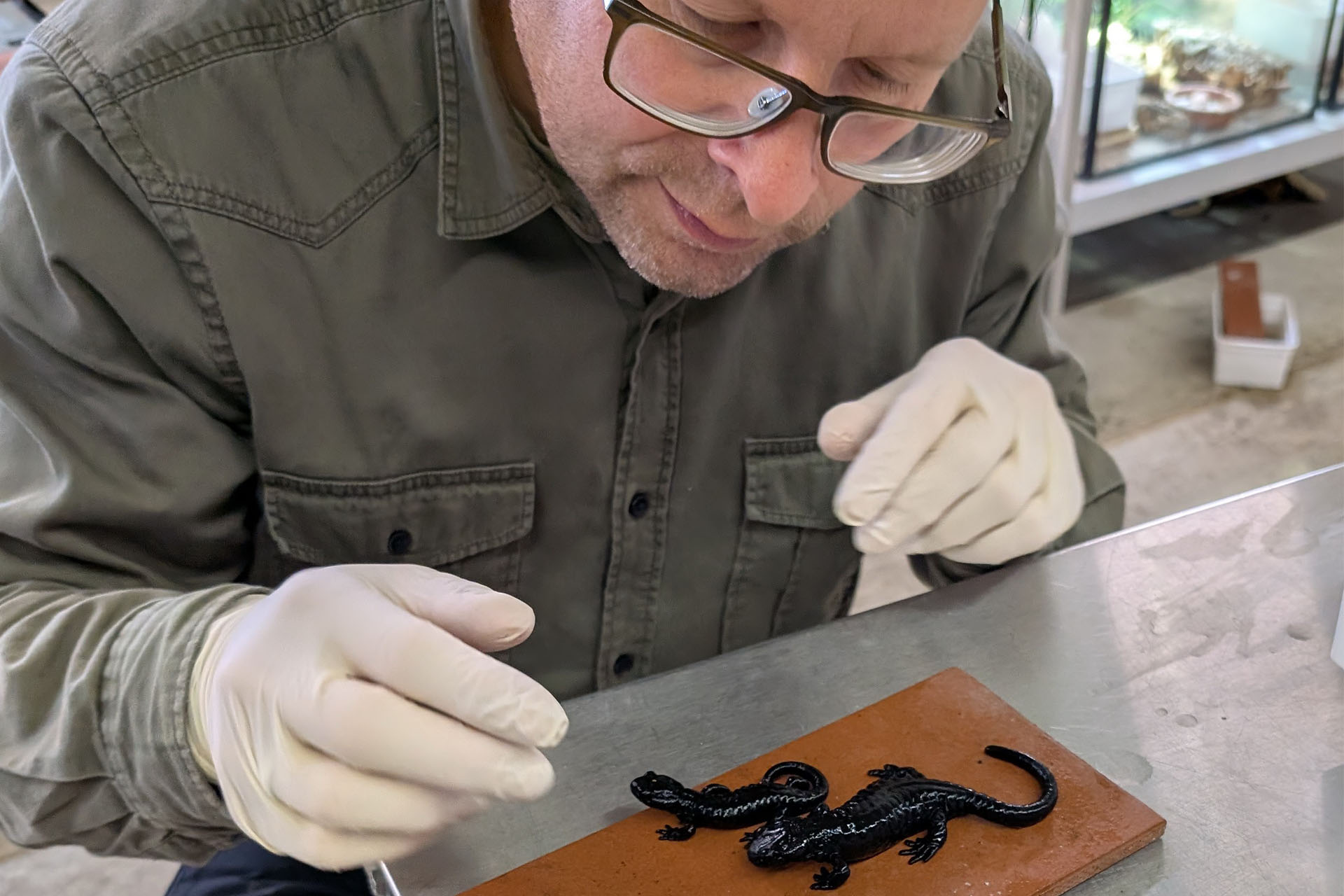
How can you tell if a salamander is comfortable? For example, by whether it is growing well and is well-nourished. However, as this cannot be reliably determined at first glance with such small amphibians – and, of course, because scientific data needs to be collected – the last day of September in the year 2026 saw a major weighing and measuring day at the ‘Salamander Bunker’ at the Sachsenhagen Wildlife and Species Conservation Centre (Wildtier- und Artenschutzstation Sachsenhagen). For just over a year now, this has been home to the majority of the Alpine Salamander Competence Centre, initiated and funded by Citizen Conservation, alongside a second branch at the Hanover Adventure Zoo. We have reported in detail in the past on the sad reason why several dozen individuals of three critically endangered forms of the Alpine Salamander live within the cool walls of former NATO bunkers in Lower Saxony.
Salamander Slow Dating
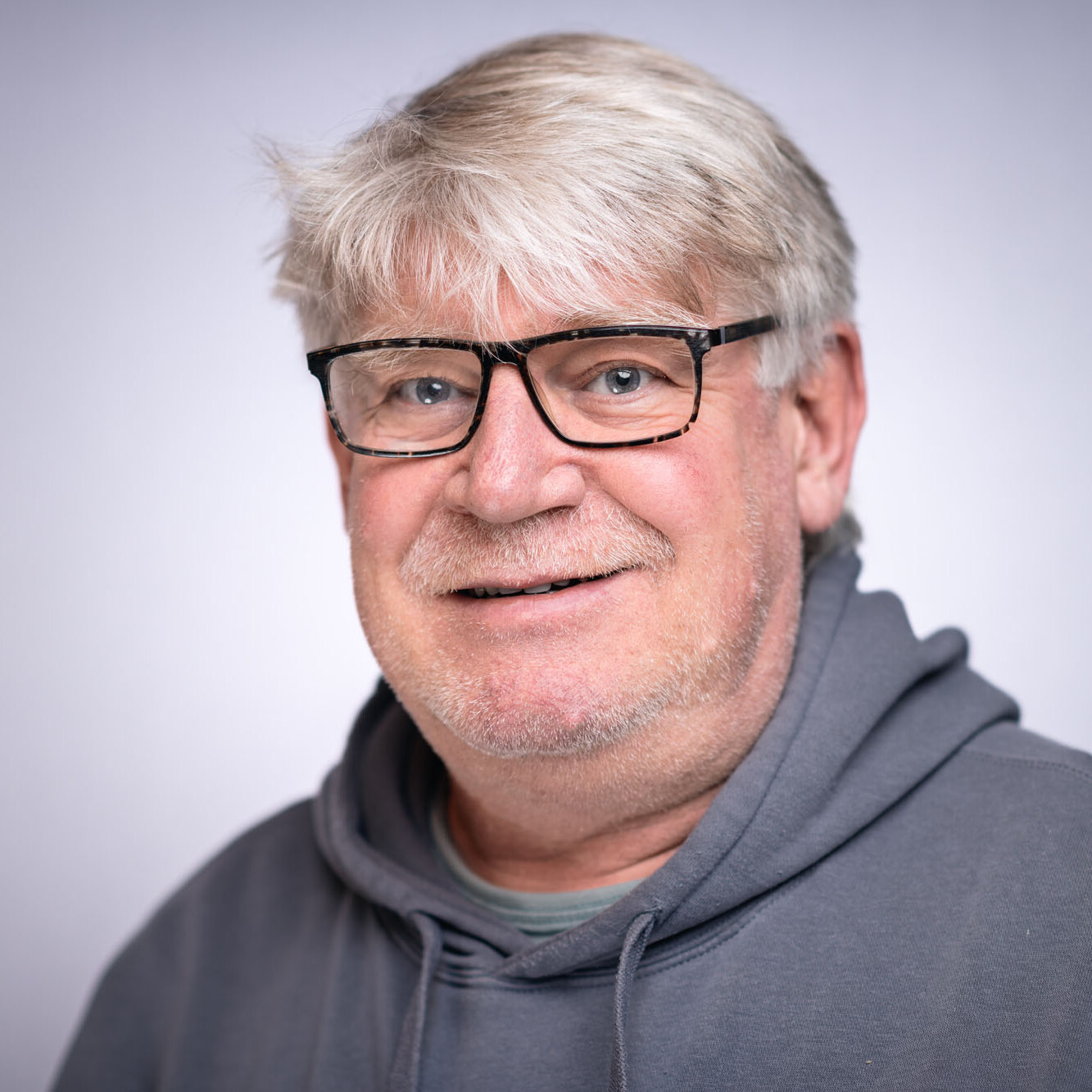
Since their rescue from poaching and poor husbandry – following their admission to the Alpine Salamander Centre of Competence and the painstaking care provided by CC staff member Uwe Seidel – the fortunes of these rare amphibians from the northern Italian Alps have taken a turn for the better. All the animals that survived this ordeal are now thriving. The first young, born last November, has also developed very well and is already a subadult. In the summer, Uwe Seidel, who oversees and monitors the care of the animals on site, initiated the first amorous advances between them: 11 pairs of sexually mature animals were grouped together in June and left in cosy companionship over the summer so that they could grow closer, before being separated again on weighing day – as the salamander naturally prefers to live alone.
To find out whether these temporary liaisons will result in offspring, however, we will need to be patient: Alpine newts have the longest gestation period of any vertebrate. It often takes up to four years from mating to the birth of the live young. But it was certainly a good sign that some of the females soon showed a clearly visible swelling of the abdomen, which presumably indicates ovulation – that is, the release of eggs from the ovary – the basic prerequisite for potential future fertilisation and proof that the seasonal cycle of the animals in the bunker has been successfully established.
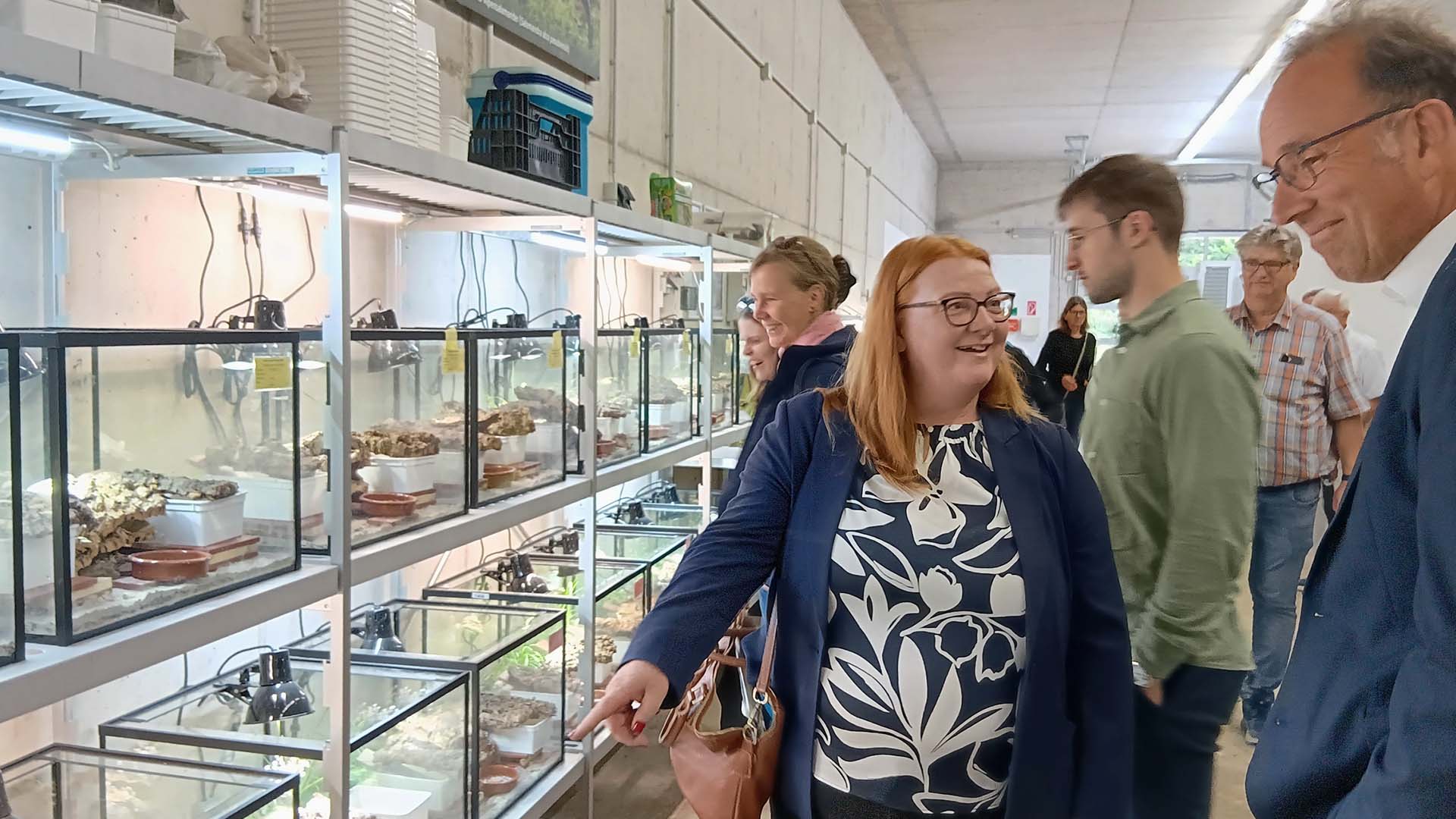
The minister and his team are inspecting the breeding facility at the Salamander Competence Centre, which is funded by Citizen Conservation
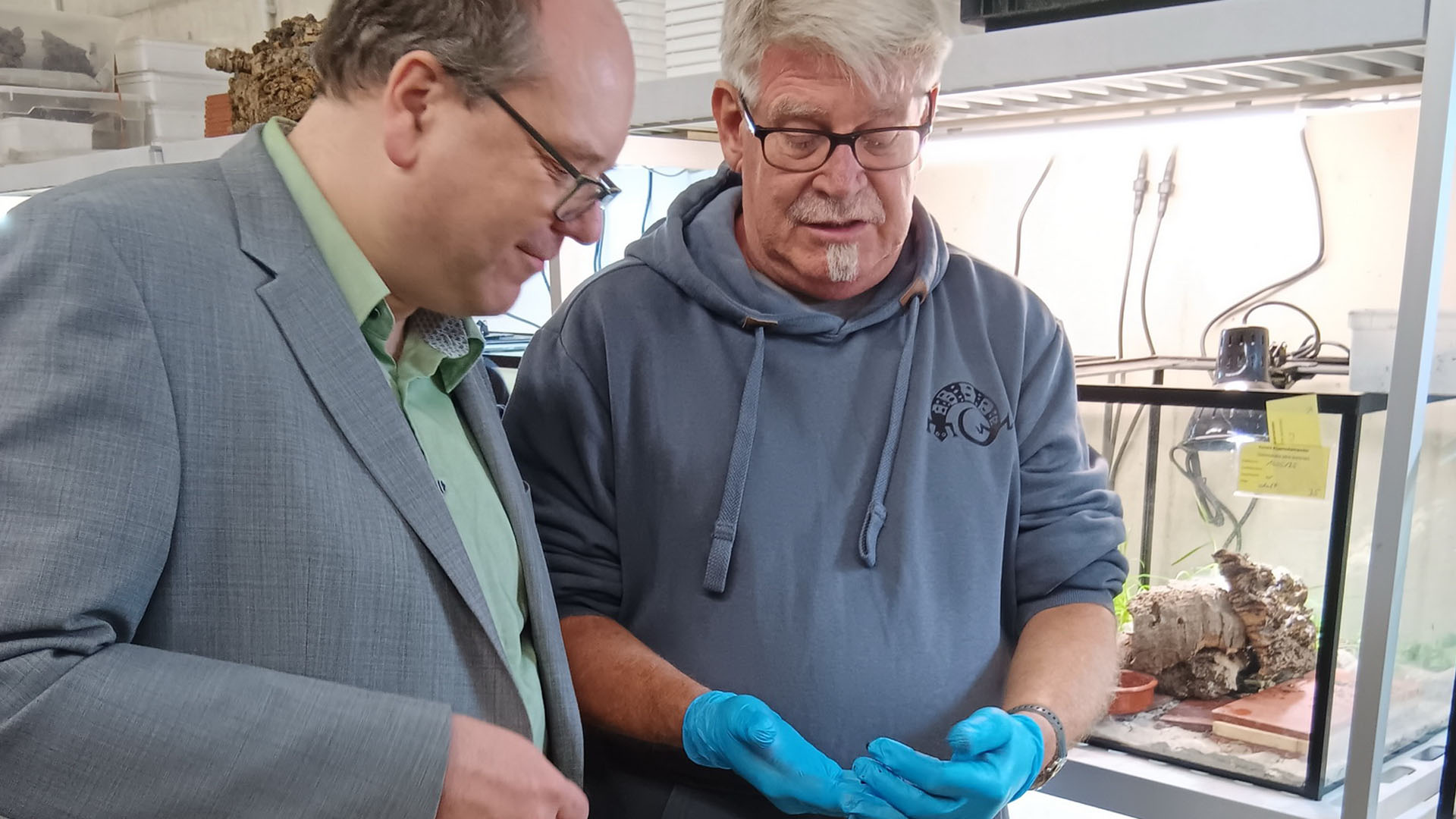
CC employee Uwe Seidel presents an Aurora Alpine Salamander to Lower Saxony’s Environment Minister, Christian Meyer
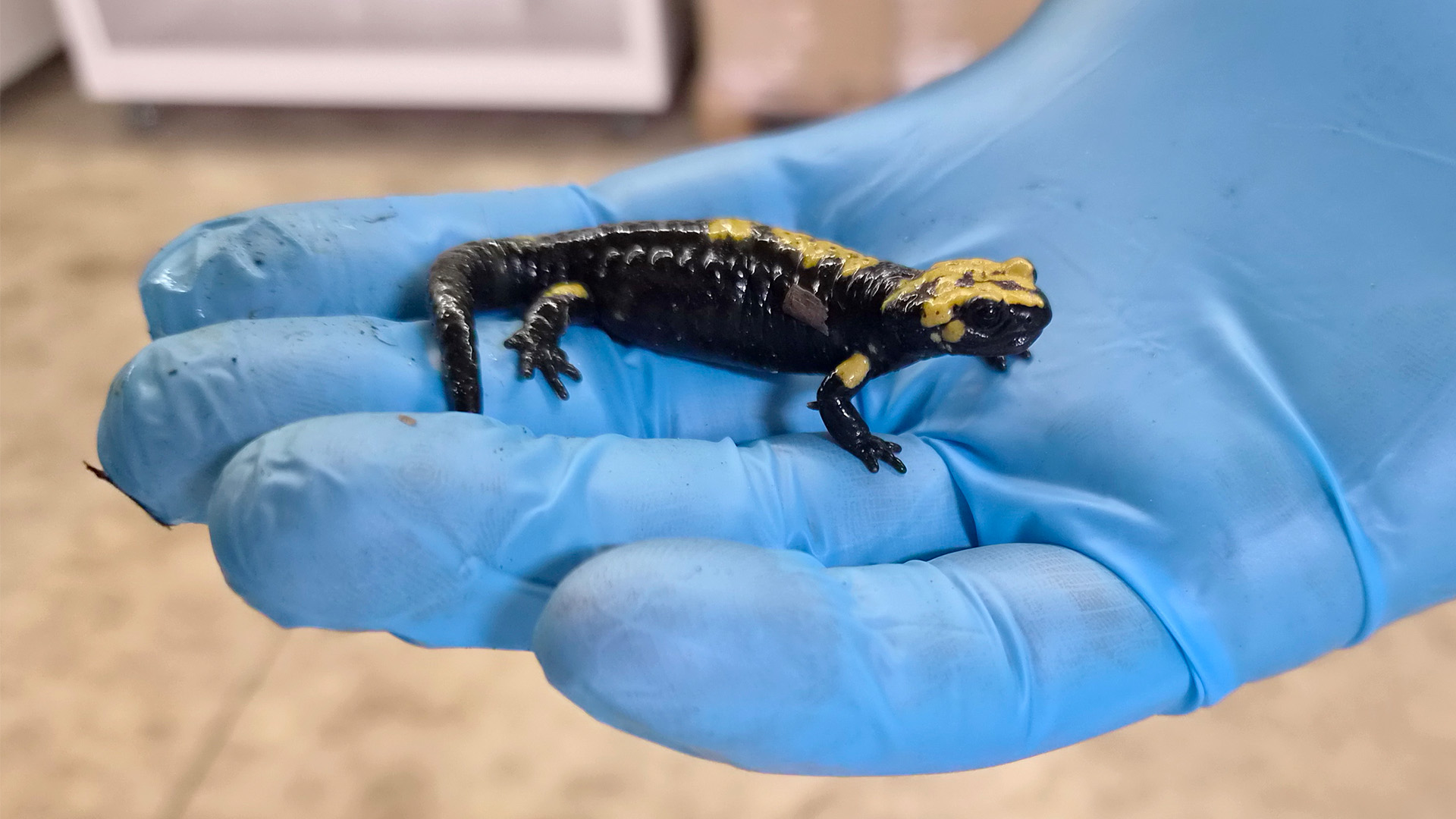
One of the stars in Sachsenhagen: the Aurora Alpine Salamander
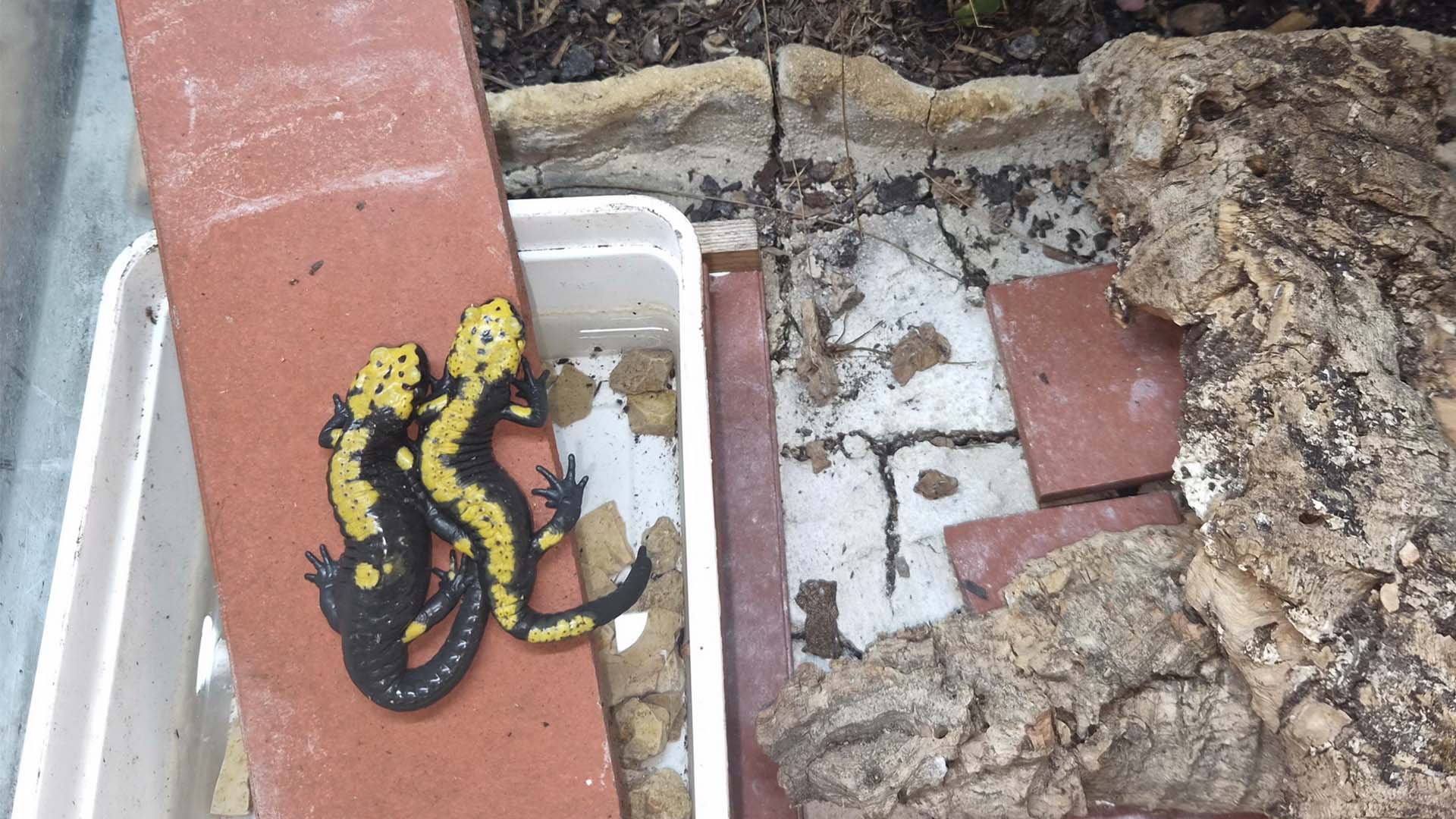
First attempt at pairing: This summer, 11 pairs of Alpine Salamanders were paired up.
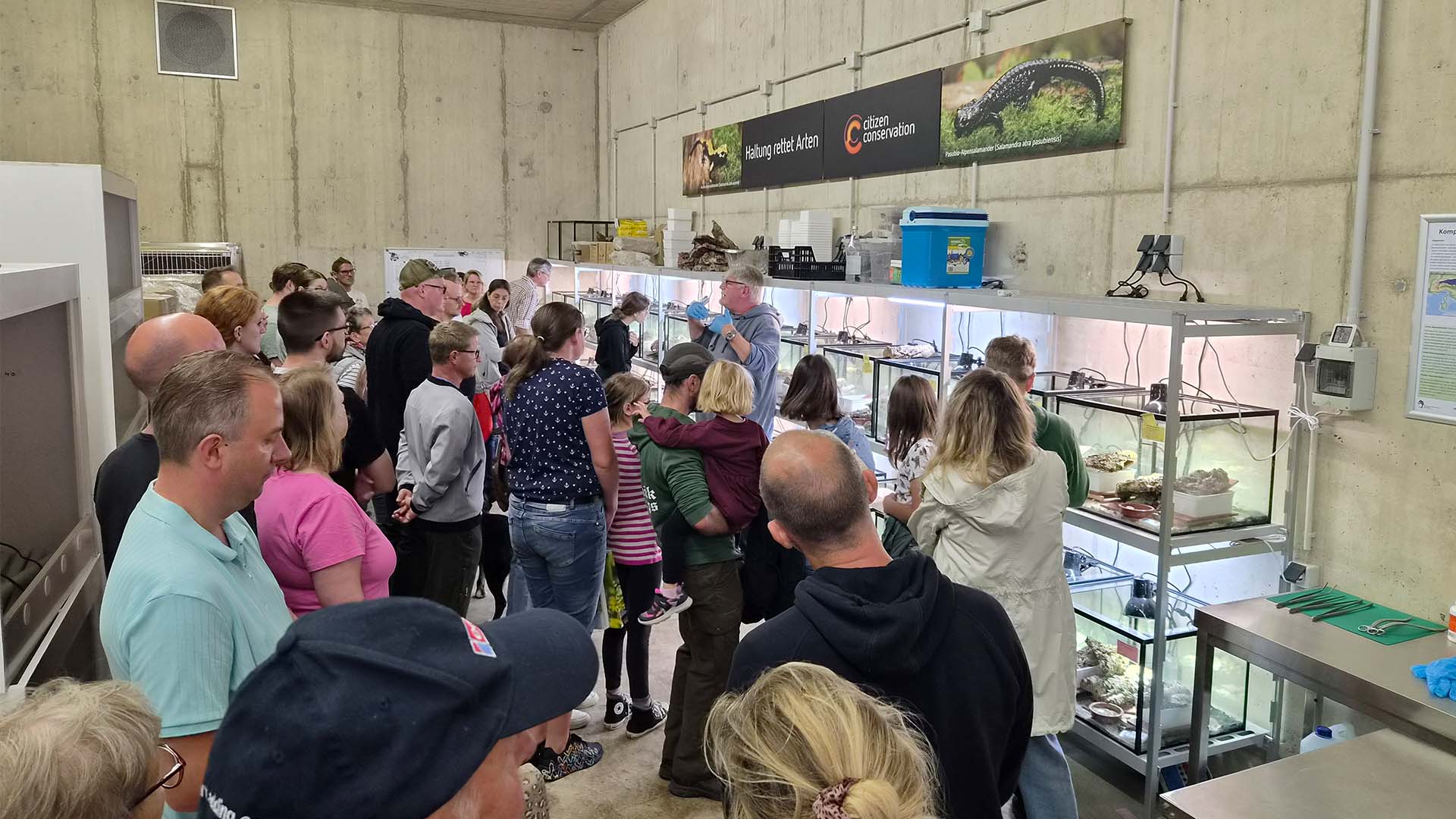
Huge crowds of visitors at the Competence Centre during the Open Day in Sachsenhagen – CC employee Uwe Seidel chats away non-stop ...
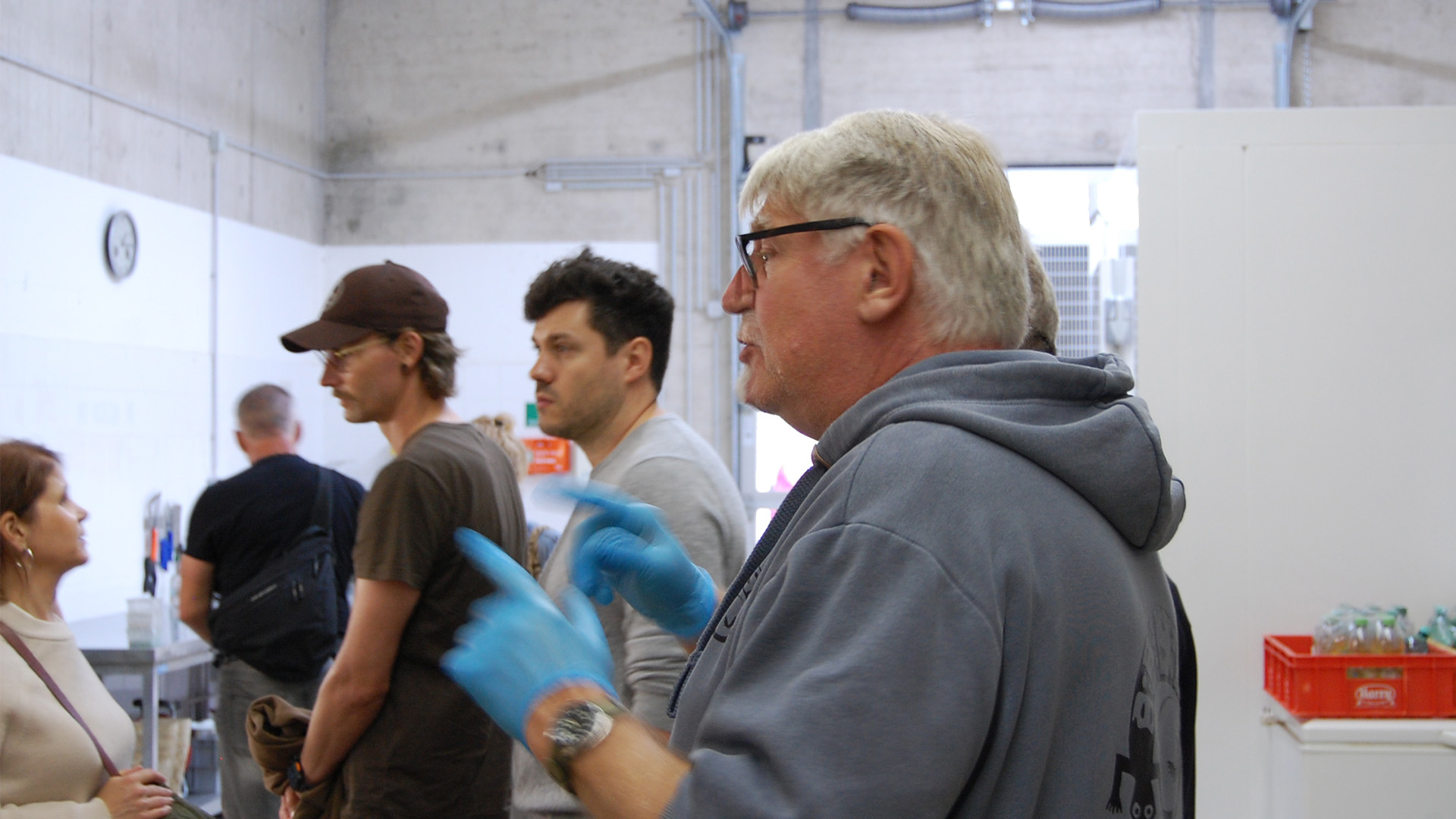
Uwe Seidel on one of the 32 guided tours during the Open Day
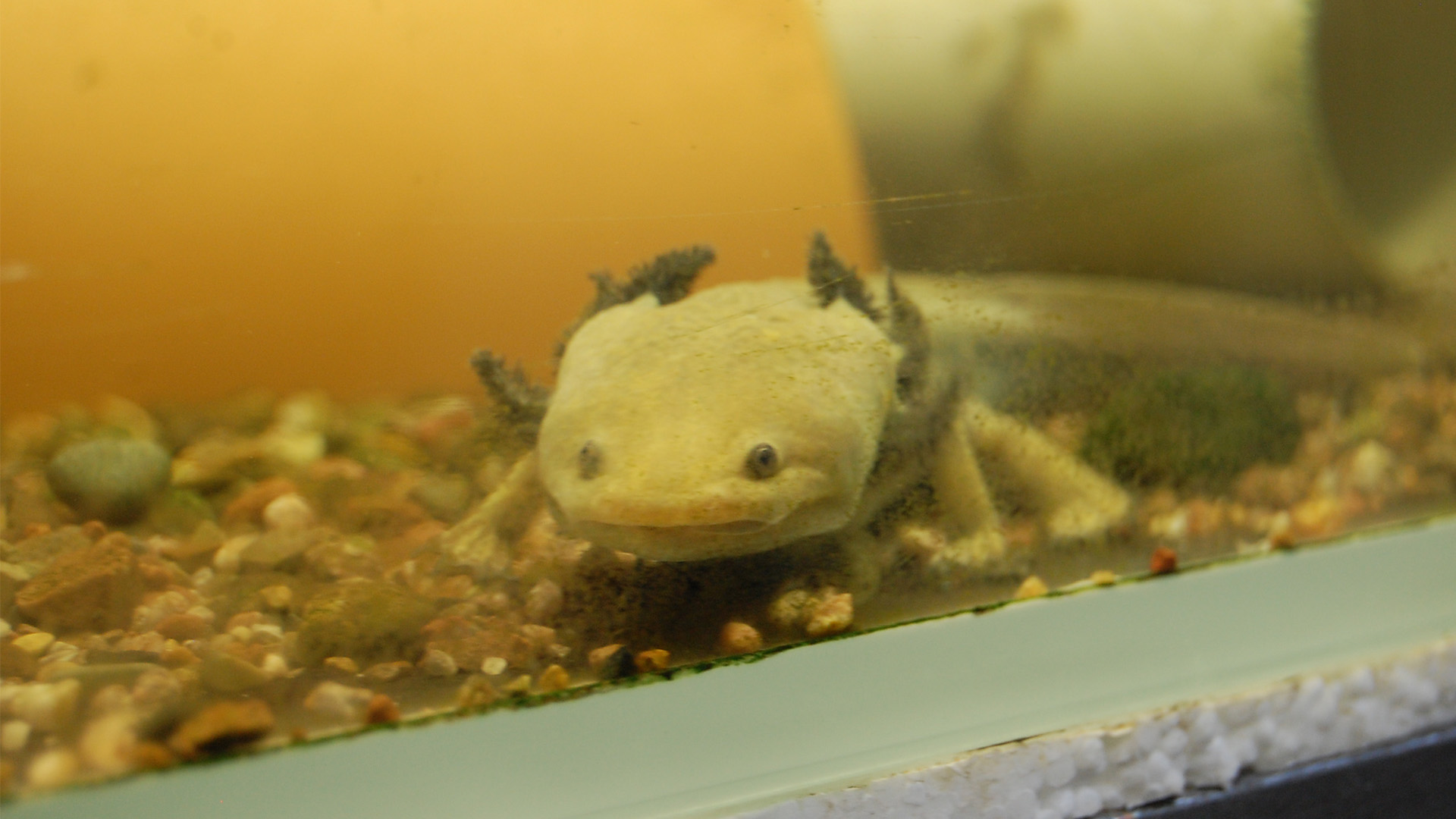
The Sachsenhagen Wildlife and Species Conservation Centre also takes part in the Citizen Conservation programme for the conservation breeding of the Patzcuaro Salamander – these quirky amphibians were also on display for visitors to admire during the open day.
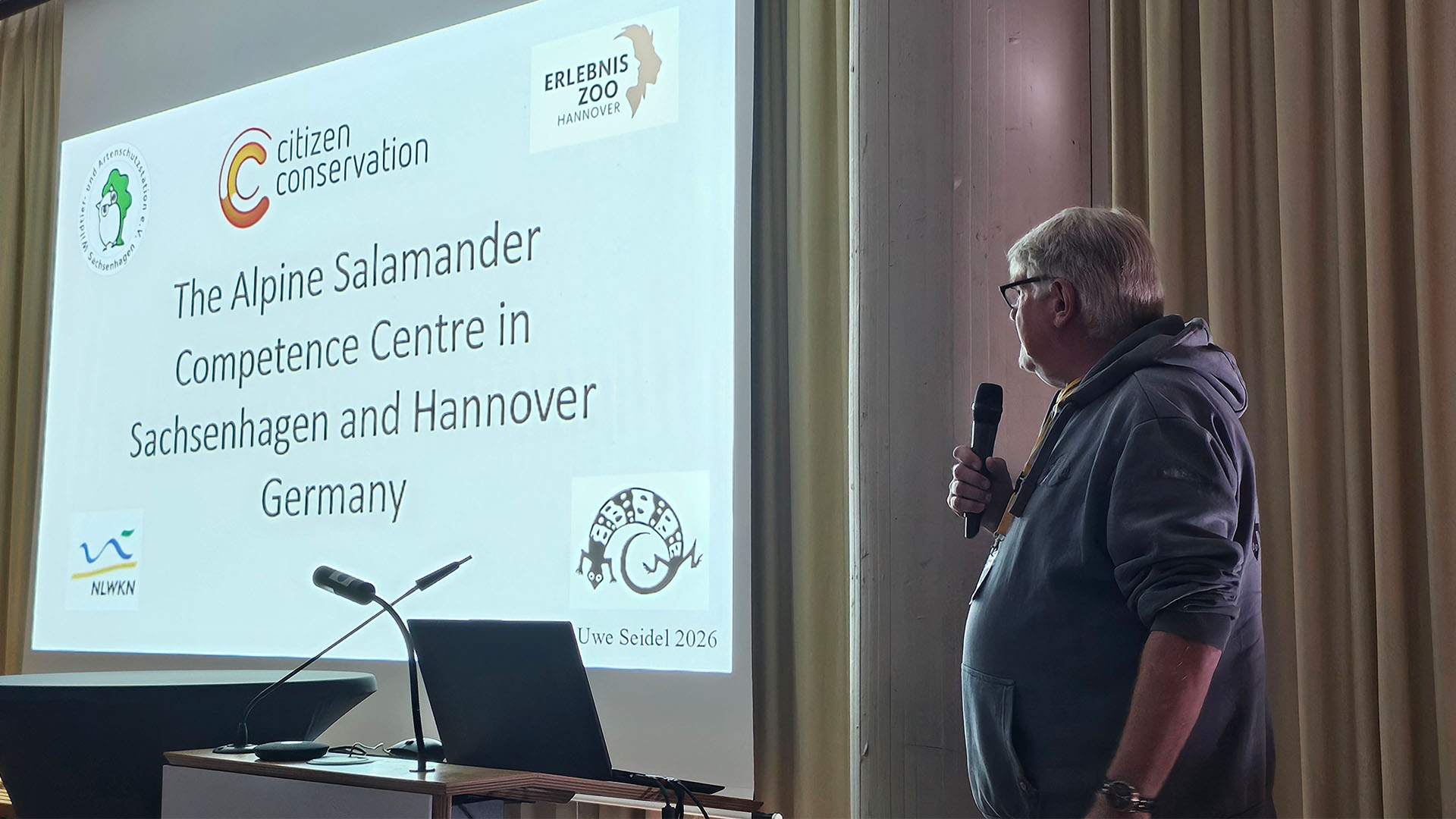
Whether at a Salamandra symposium in Ostana, Italy, or at the annual conference of the German Society for Herpetology and Terrarium Science (DGHT) at the Stuttgart Natural History Museum – there is considerable interest in the Alpine Salamander Competence Centre amongst experts.
A blueprint for the salamander rescue
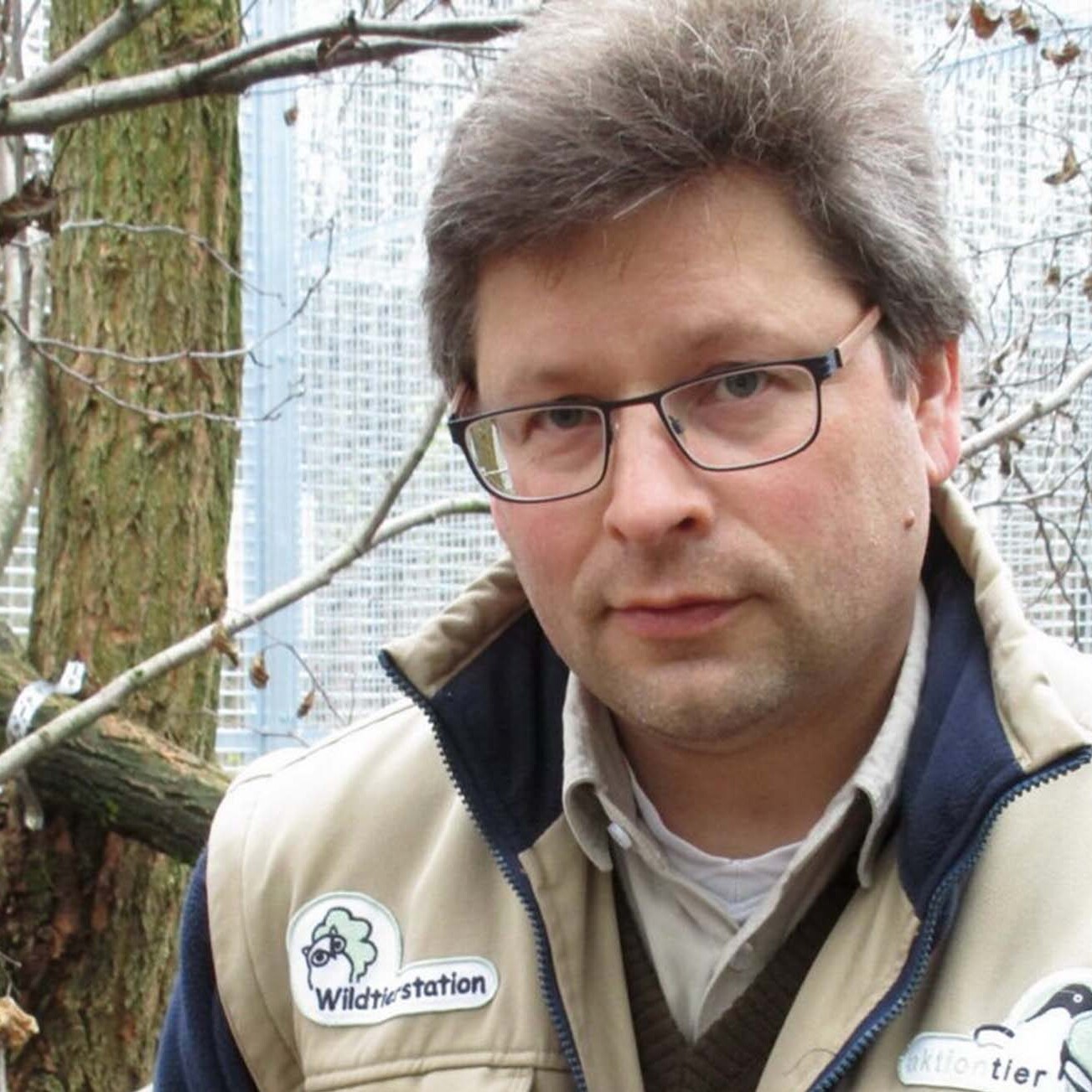
Our remarkable species conservation project for the ‘Amphibian of the Year 2026’ has now attracted quite a bit of attention. On 3 July this summer, Christian Meyer, Lower Saxony’s Minister for the Environment, Energy and Climate Protection, paid a visit to inspect the amphibians and the Competence Centre. Florian Brandes, station manager at Sachsenhagen, and Uwe Seidel showed him around and explained everything about the efforts to establish an ex situ breeding programme for these amphibians.
The expertise already gained in this area has also attracted the interest of the scientific community. For example, the Competence Centre was one of the topics at an Italian symposium held from 11 to 12 July in Ostana, situated right within the range of Lanza’s Alpine newt – one of the three endangered subspecies being cared for in Sachsenhagen and Hanover. Representing Uwe Seidel, Prof. Sebastian Steinfartz from the University of Leipzig presented the project to the assembled Italian, French and Swiss colleagues. It thus also serves as a blueprint for further projects of this kind – starting with a facility modelled on the Sachsenhagen one at Paris Zoo, where a further ex-situ conservation programme for Lanza’s Alpine newt has been established with 17 animals collected with official authorisation. The findings will also be made available to a wider specialist audience through the conference proceedings, and the CC’s Competence Centre will be presented at the International Symposium on the Alpine Salamander, taking place in Salzburg, Austria, from 13 to 15 November.
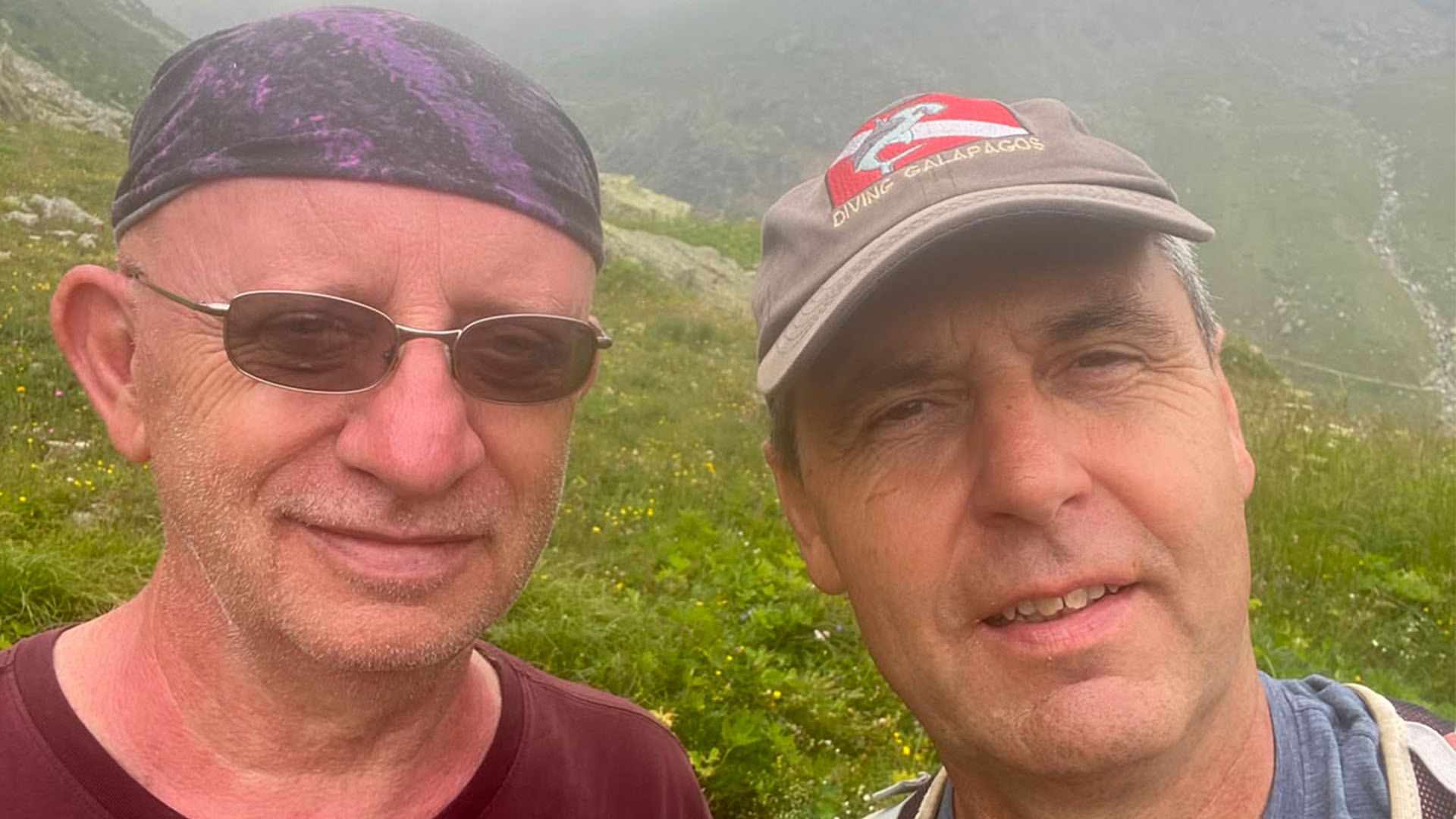
The Alps are an international place: Franco Andreone from the University of Turin, the organiser of the Alpine Salamander conference in Italy, in the habitat of the Lanza’s Alpine Salamander with Sebastian Steinfartz from the University of Leipzig, who presented the Alpine Salamander Centre of Competence on behalf of Uwe Seidel for CC at the conference.
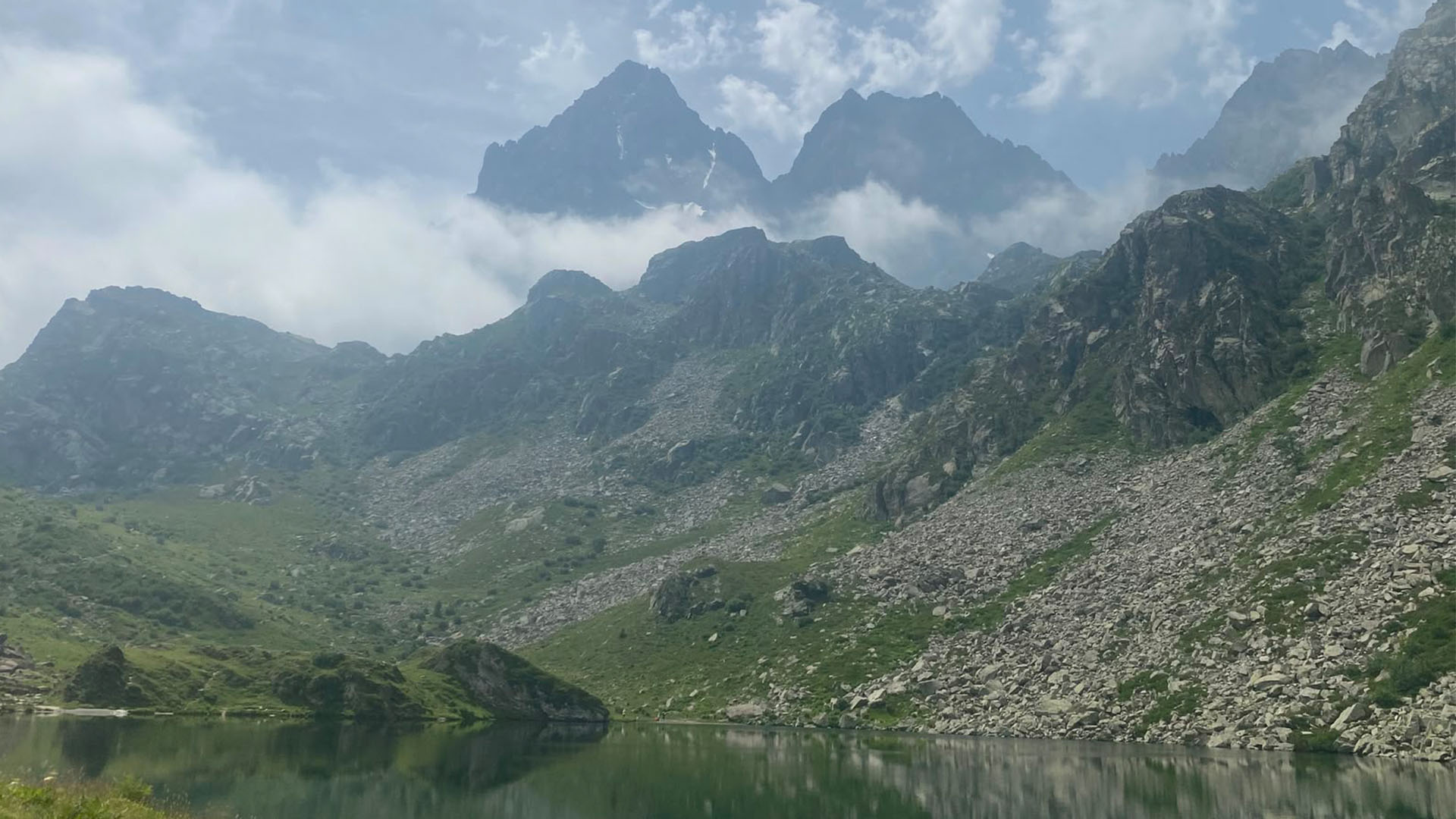
A look at the habitat of Lanza’s Alpine Salamander at the conference venue – a rugged high-mountain landscape, albeit snow-free in summer
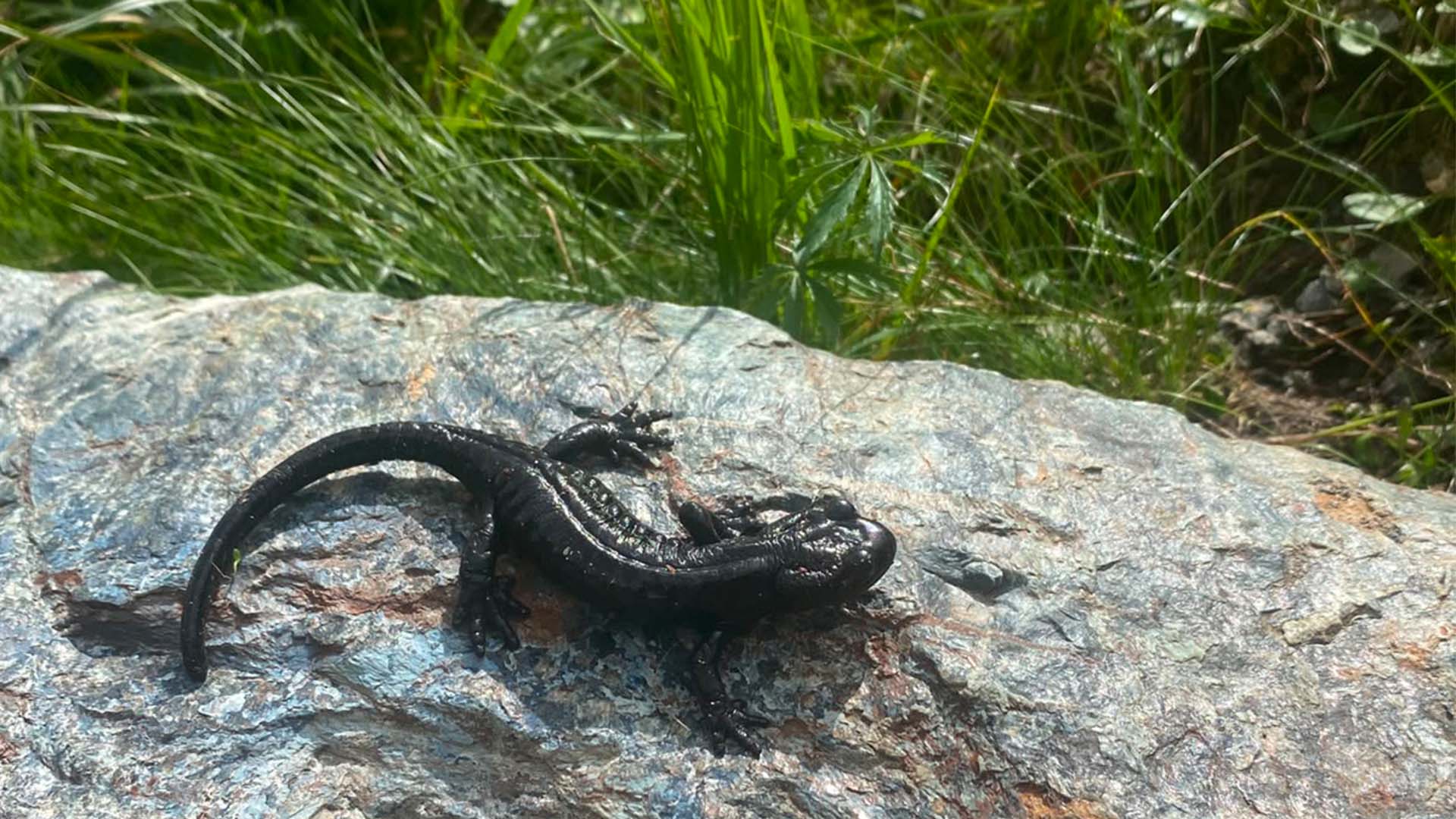
Lanza’s Alpine Salamander in its natural habitat
A massive rush before the break
But it is not only experts who are interested in the Alpine Salamander Competence Centre – at the open day in Sachsenhagen on 30 August, public interest was so great that Uwe Seidel had to conduct a whopping 32 guided tours instead of the planned three, and so, over the course of a long, tiring day, he guided 1,000 keenly interested visitors through the bunker complex, explaining the unique characteristics of these very special amphibians and the necessity of their ex-situ conservation and breeding.
Following this exciting summer, however, things are now gradually returning to a state of calm at the Competence Centre for a longer period: at the latest when the first snow falls in their natural range, the short active period of the alpine newts will also come to an end, and they will then retreat into their well-deserved winter hibernation for a good six months …