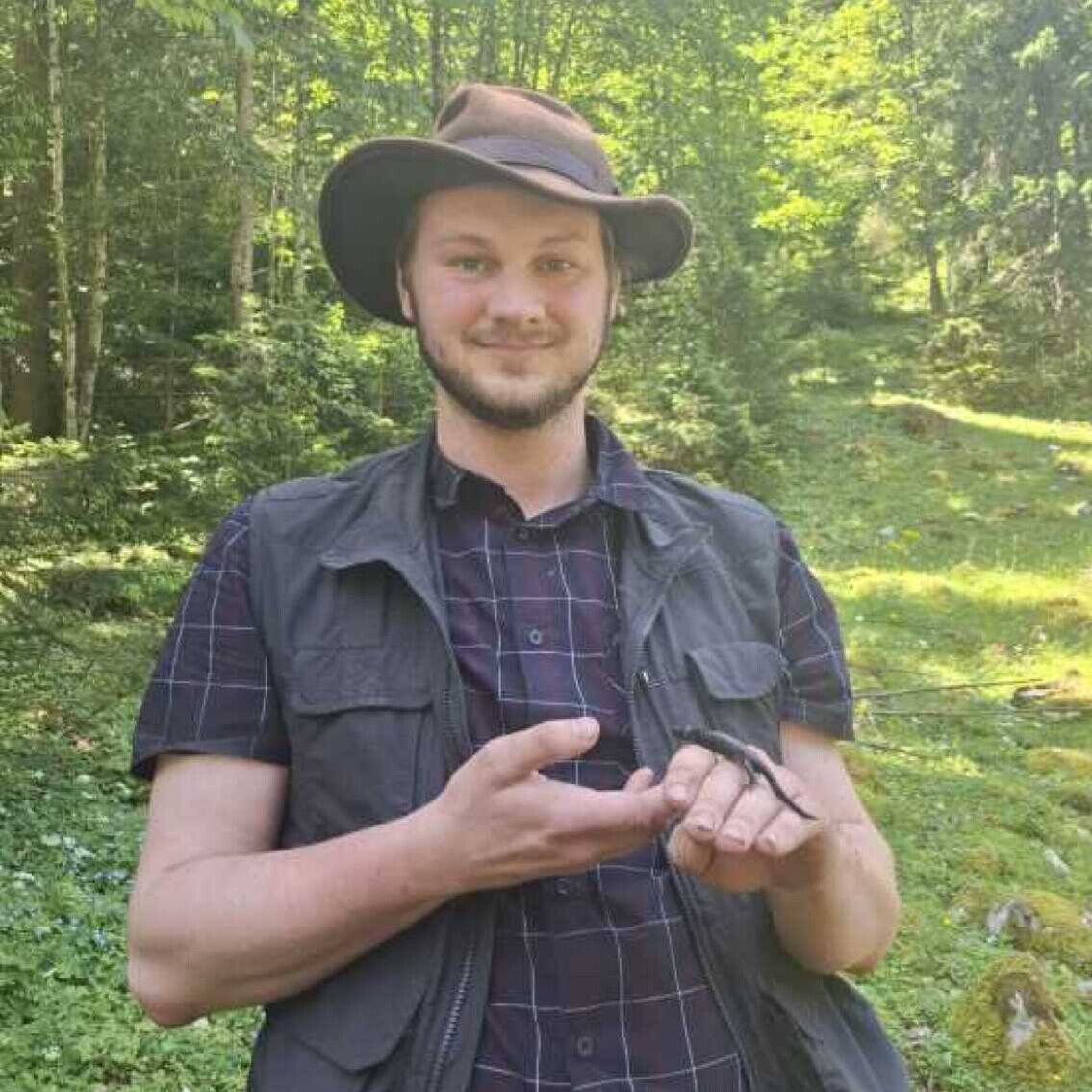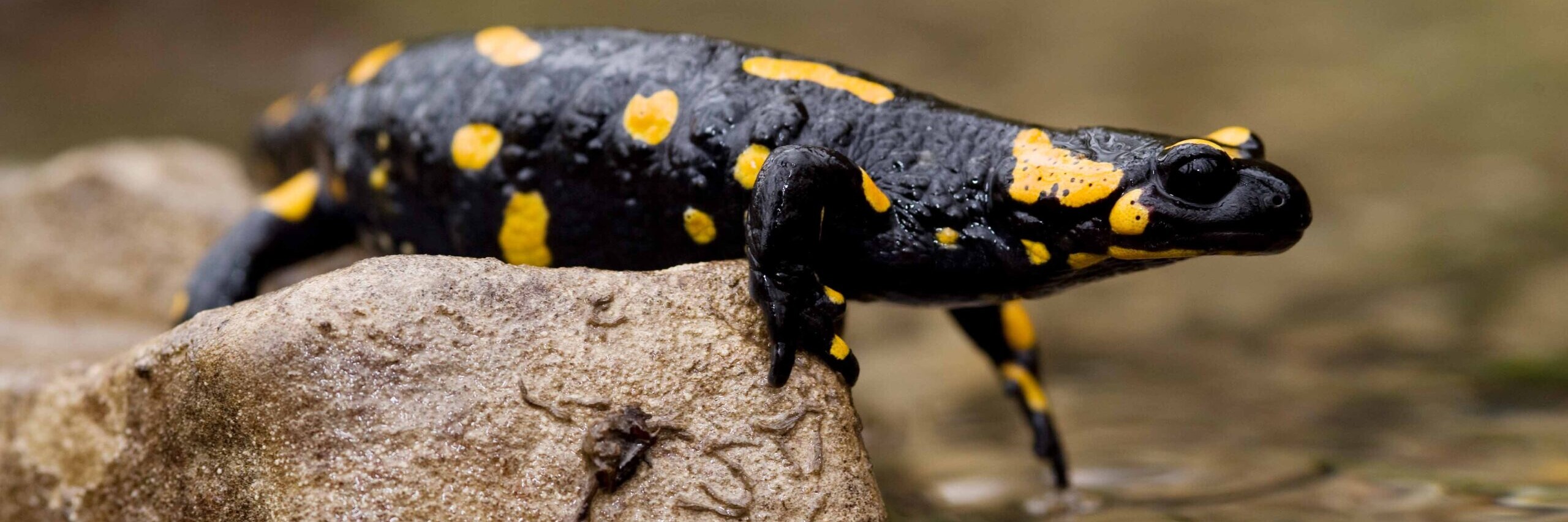



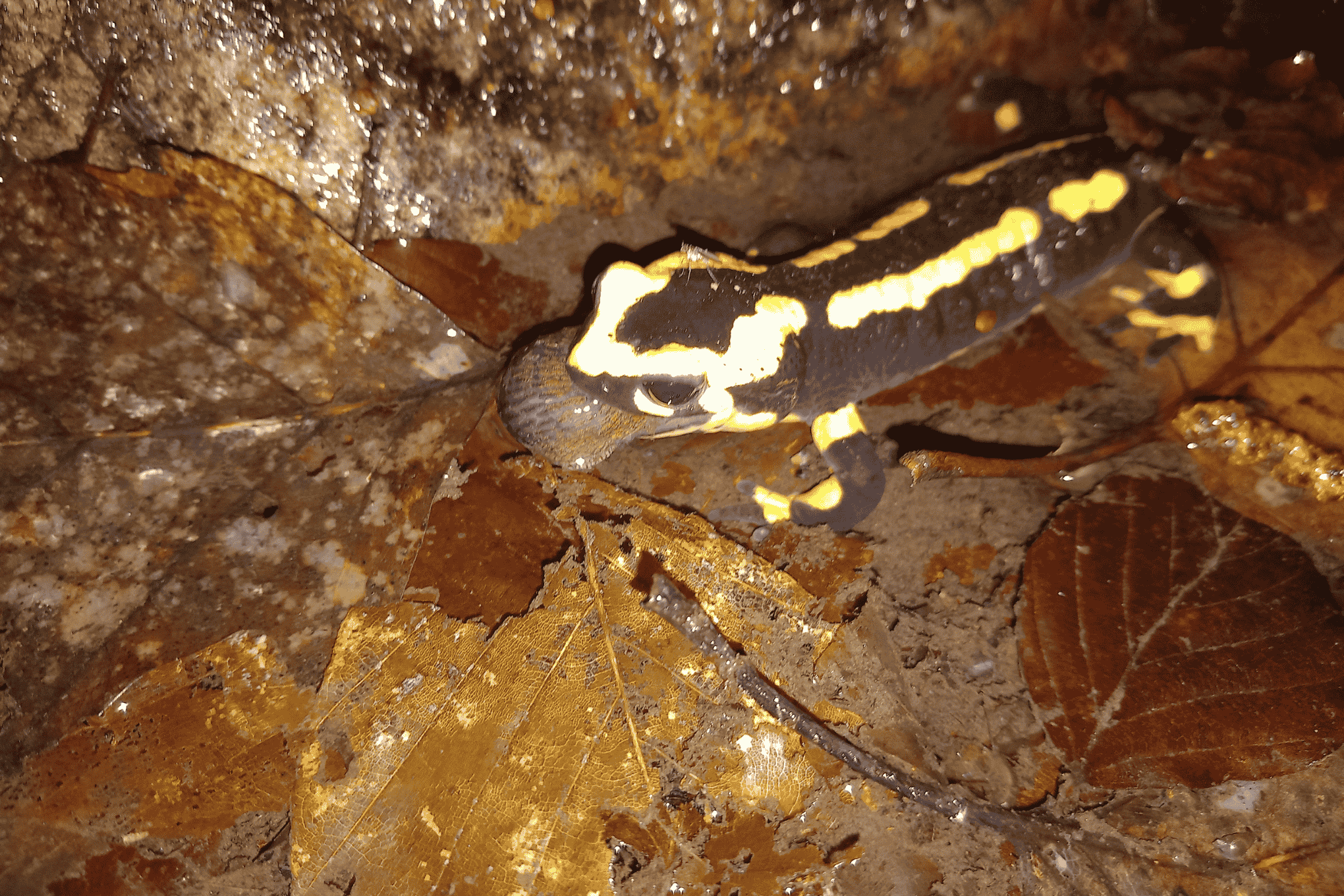
Fire Salamander with potential vectors of infection (mosquitoes, snails).
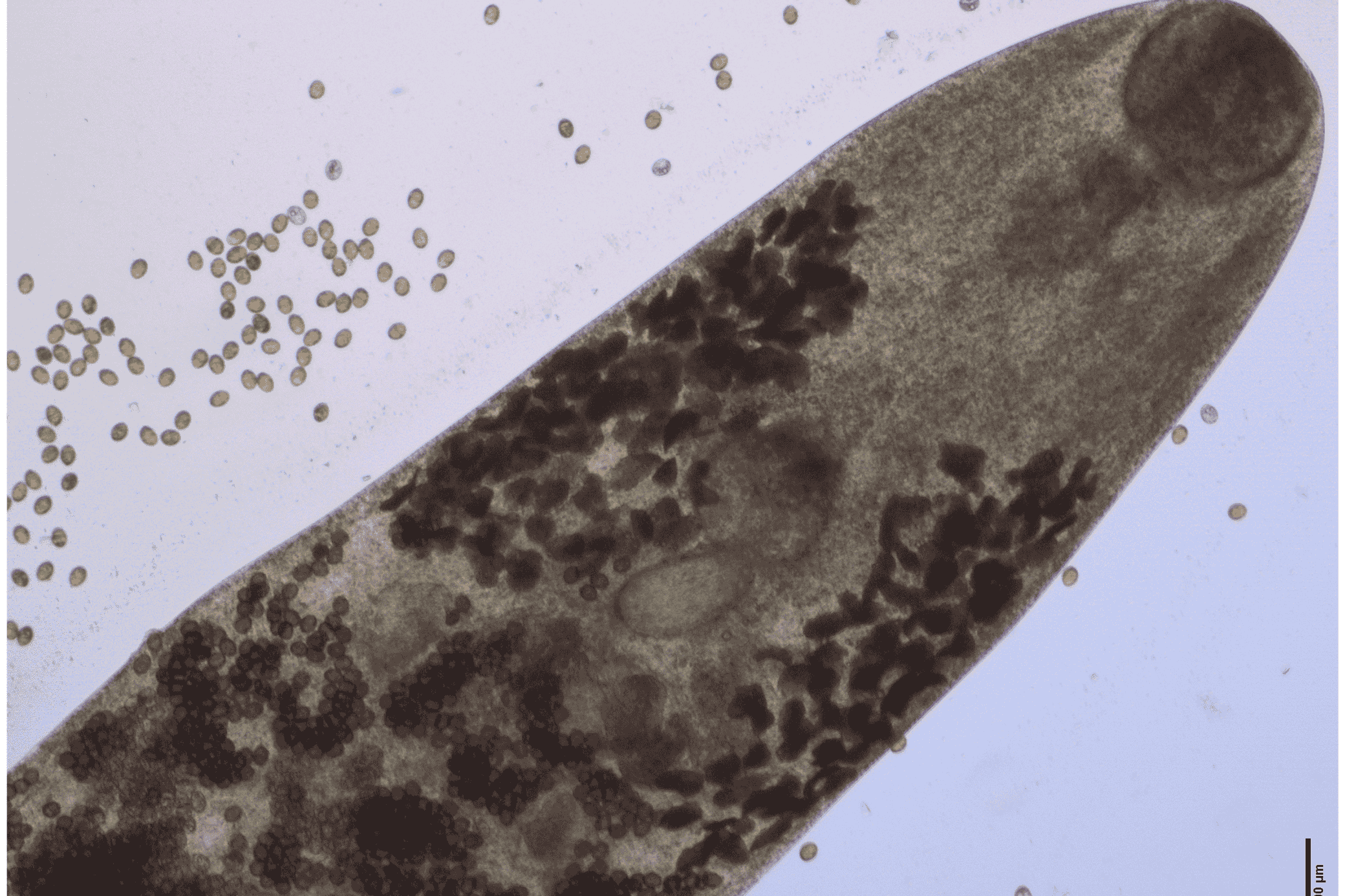
The trematode Brachycoelium salamandrae, which, despite its widespread distribution, has been little researched.
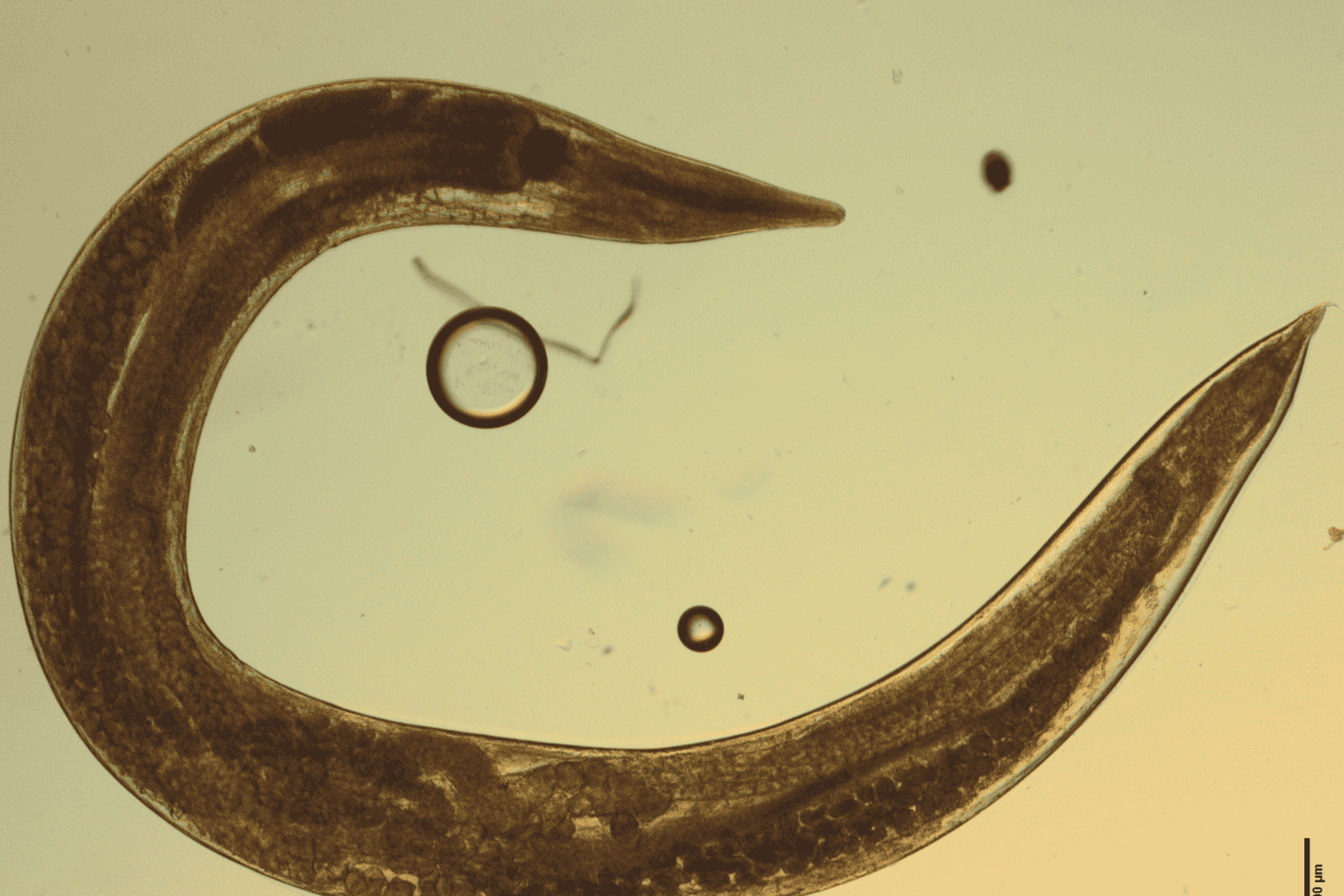
Female nematode Cosmocerca longicauda, a very common parasite in Fire Salamanders.
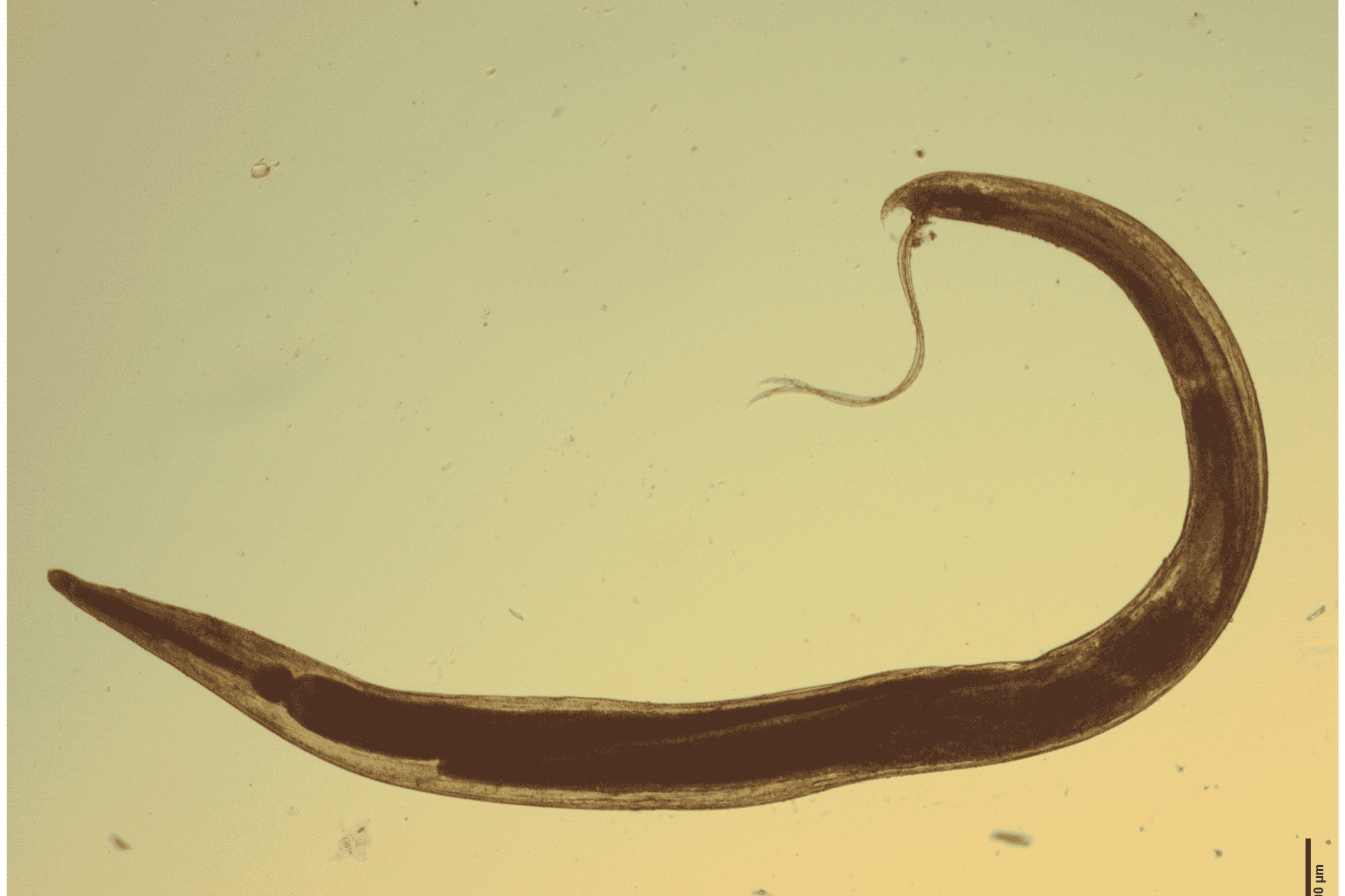
Male Nematode Cosmocerca longicauda.
Examination for helminth parasites
To address these knowledge gaps and initiate a parasitological investigation of several fire salamander populations in Germany, researchers at the University of Duisburg-Essen, funded by the German Federal Environmental Foundation (DBU), are currently examining three populations for helminth parasites. For this purpose, individuals that have succumbed to Batrachochytrium salamandrivorans (Bsal) infection or were killed by traffic are dissected. The resulting data will expand existing parasite databases with morphological and molecular information.
These findings will serve as a foundation for developing monitoring methods that do not rely on the killing of host animals and thus allow the examination of healthy fire salamander populations in Germany and across Europe. Following the taxonomic identification of the detected parasites, further insights into their life cycles are expected, shedding light on their ecological roles within the food webs and ecosystems associated with the fire salamander. In addition, their potential suitability as bioindicators for the ecology of salamander habitats will be evaluated.
In later stages of the project, other amphibian species and their parasites will also be included. Findings and challenges related to European amphibian helminths, together with a comprehensive list of helminths and their hosts documented in Europe, can be found in the project’s first publication: ‘Amphibian helminths in Europe revisited: taxonomy, threats, and ecological insights‘