

Bsal Monitoring in Austria
admin
In order to better assess the spread of Bsal and the associated risk to salamanders in Austria, Bsal monitoring has been carried out since 2016.
Thanks to the tremendous support of volunteer and self-funded biologists, the same salamander populations are checked annually, where possible. Monitoring has now been extended to all nine federal states of Austria. To date, over 3,200 skin swabs from native salamanders at over 80 locations have been tested negative for the pathogen. It is also particularly noteworthy that the University of Veterinary Medicine Vienna has been analysing our samples free of charge for ten years.
We are delighted that our efforts have resulted in visitors to the Dürrenstein-Lassingtal wilderness area and the Rothwald forest, the last primeval forest in Central Europe, which is home to both Fire Salamanders and Alpine Salamanders, being required to disinfect their shoes and equipment before a guided tour and being informed about the fungal disease at the same time.
As the fungus most likely originated in Asia and was introduced by animals in captivity, over 900 additional samples from animals in private and zoo captivity were also tested, which also showed no evidence of the Bsal fungus.
Unfortunately, the danger has not been averted, but is right on our doorstep. The nearest location where animals testing positive for Bsal were found is only about 50 km from the northern border of Tyrol. With our monitoring, we can only venture an annual assessment at specific points in time and are dependent on reports of dead animals found by the public in order to be able to quickly investigate a possible outbreak.
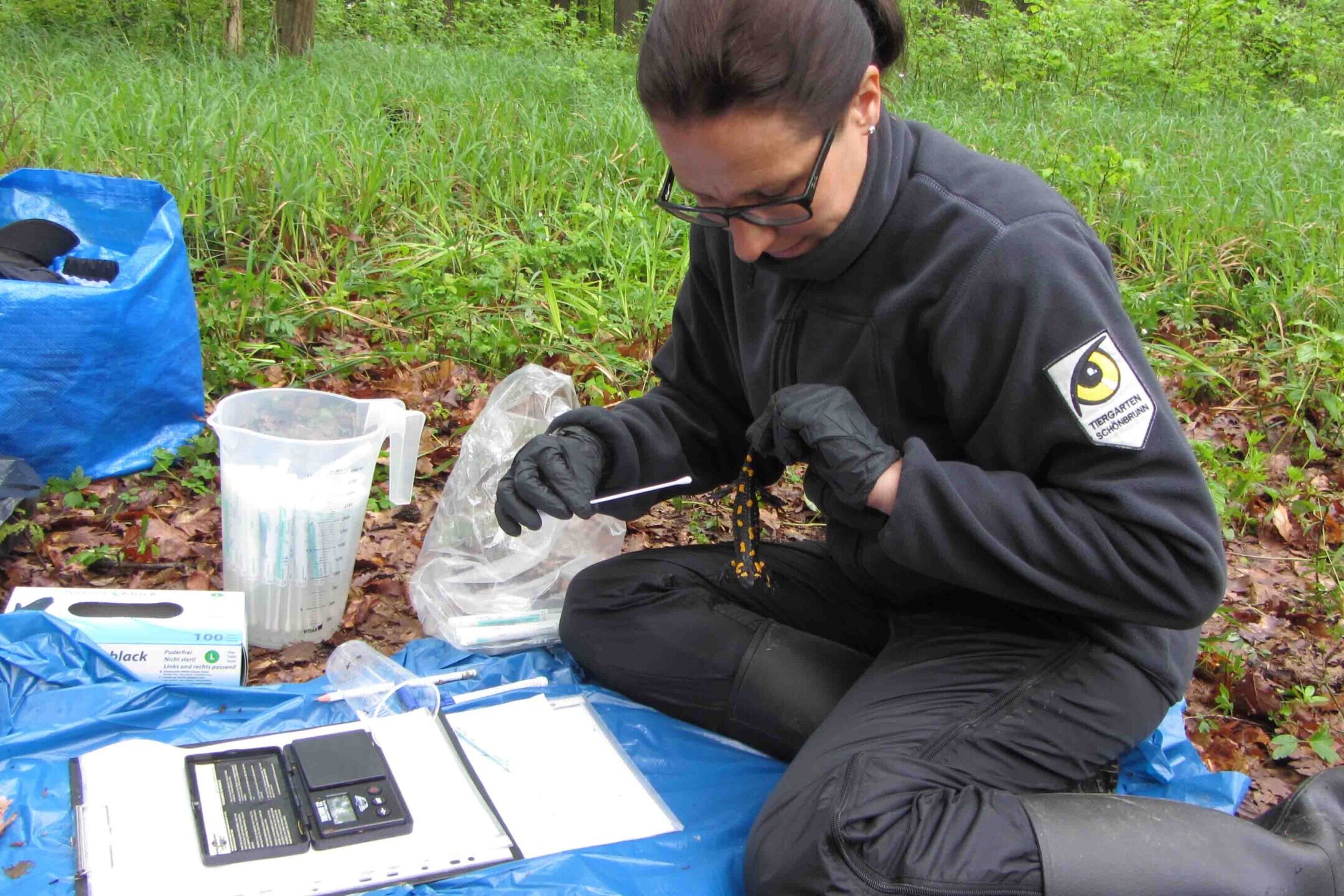
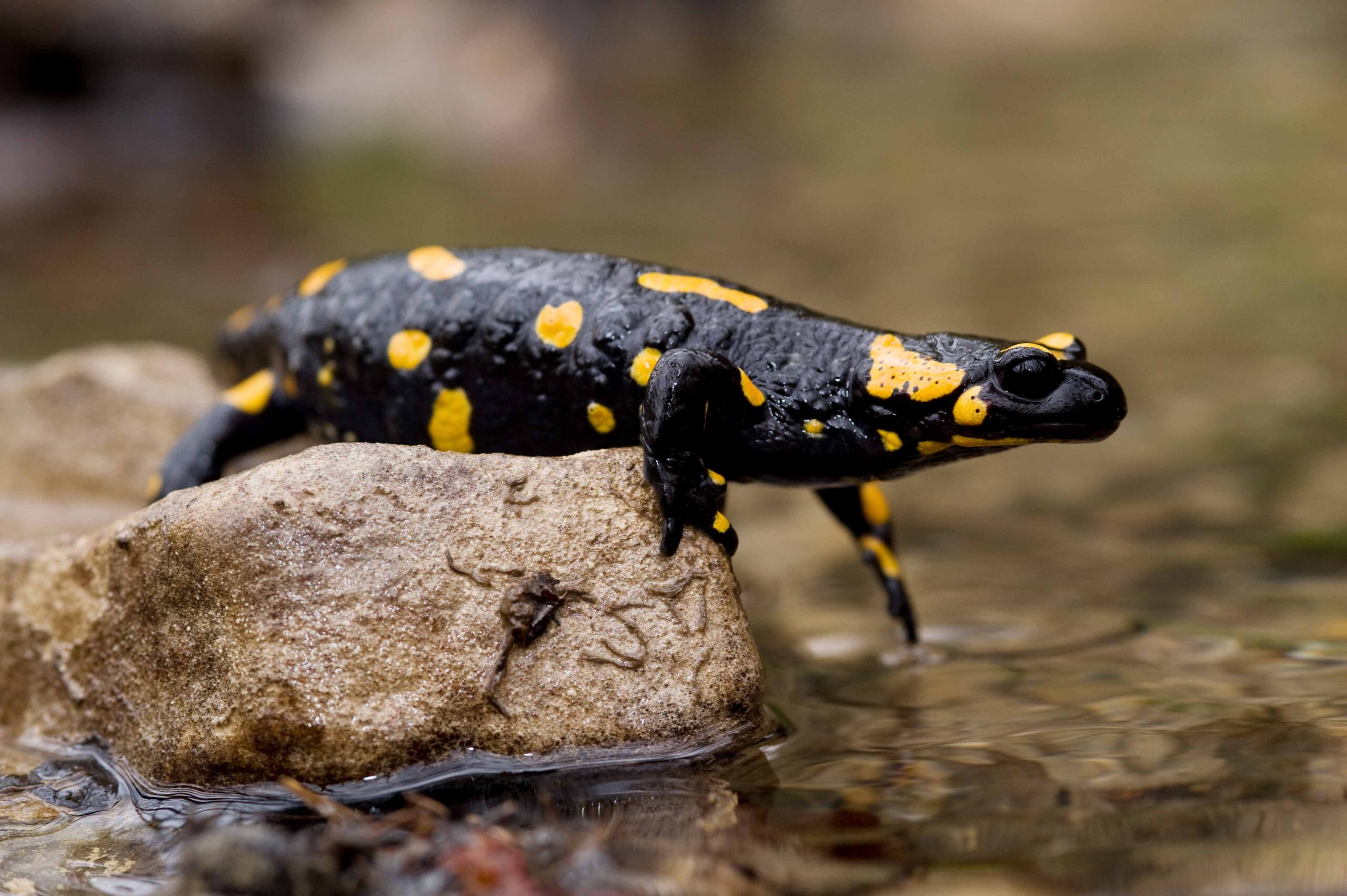
Bsal sampling: Dr. Doris Preininger samples a Fire Salamander with a swab.
How to support
Information on how everyone can help, useful tips and contact persons in the respective Austrian federal states can be found in our Bsal folder, which can be accessed directly on your mobile phone via the enclosed QR code. Both locals and visitors to Austria are urged to thoroughly clean and dry their equipment, especially their shoes, and, if time is of the essence, to disinfect it before entering the salamanders’ habitat!

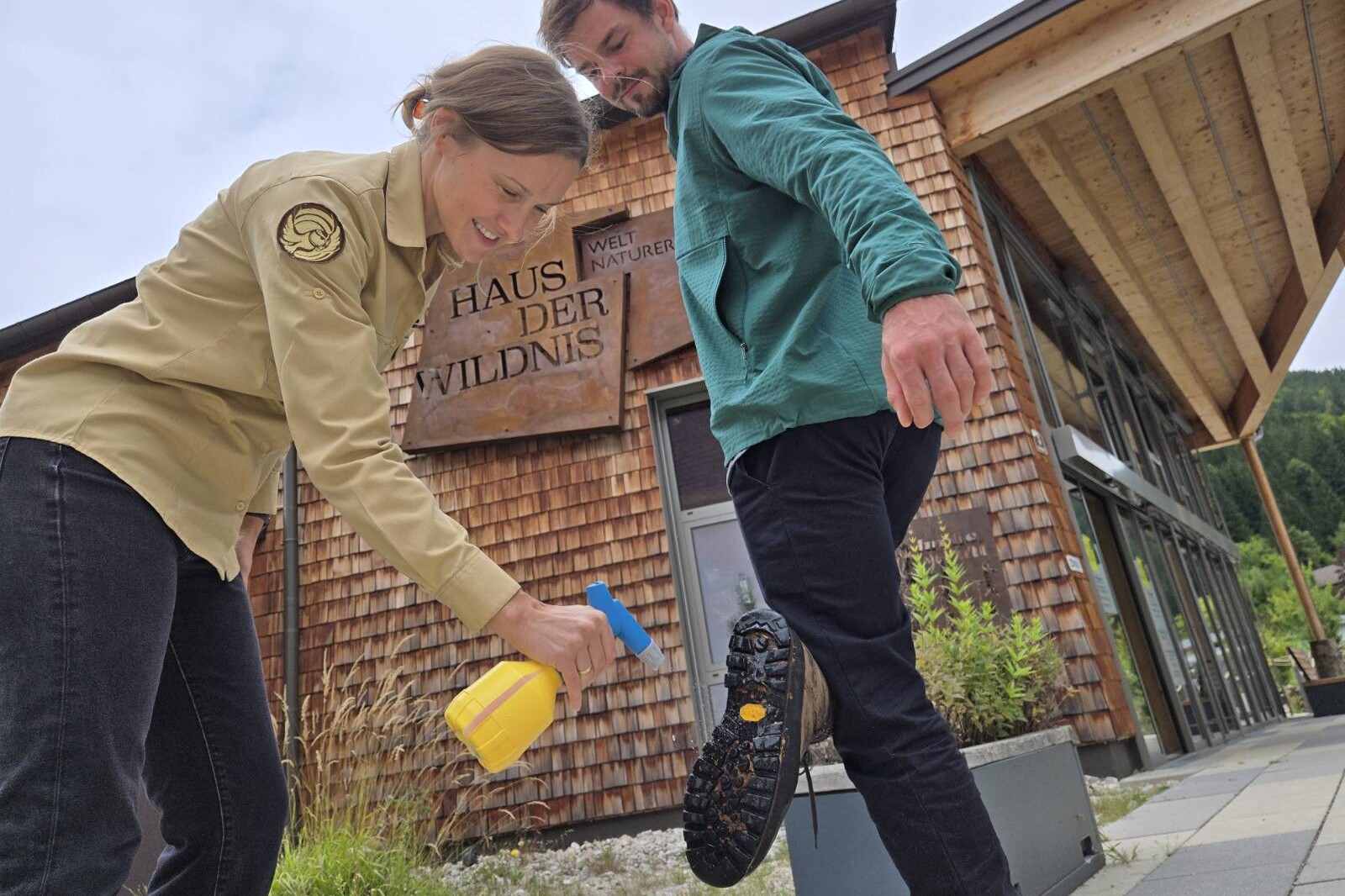
Before entering the House of Wilderness, shoes are thoroughly sprayed with a disinfectant solution.



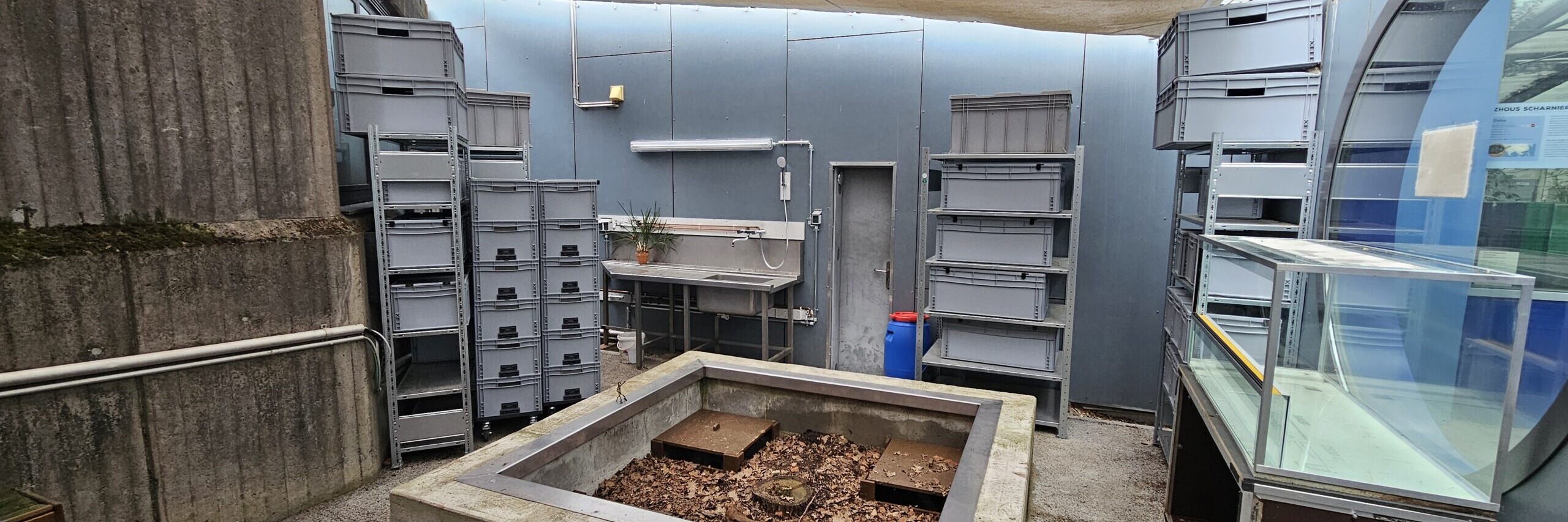

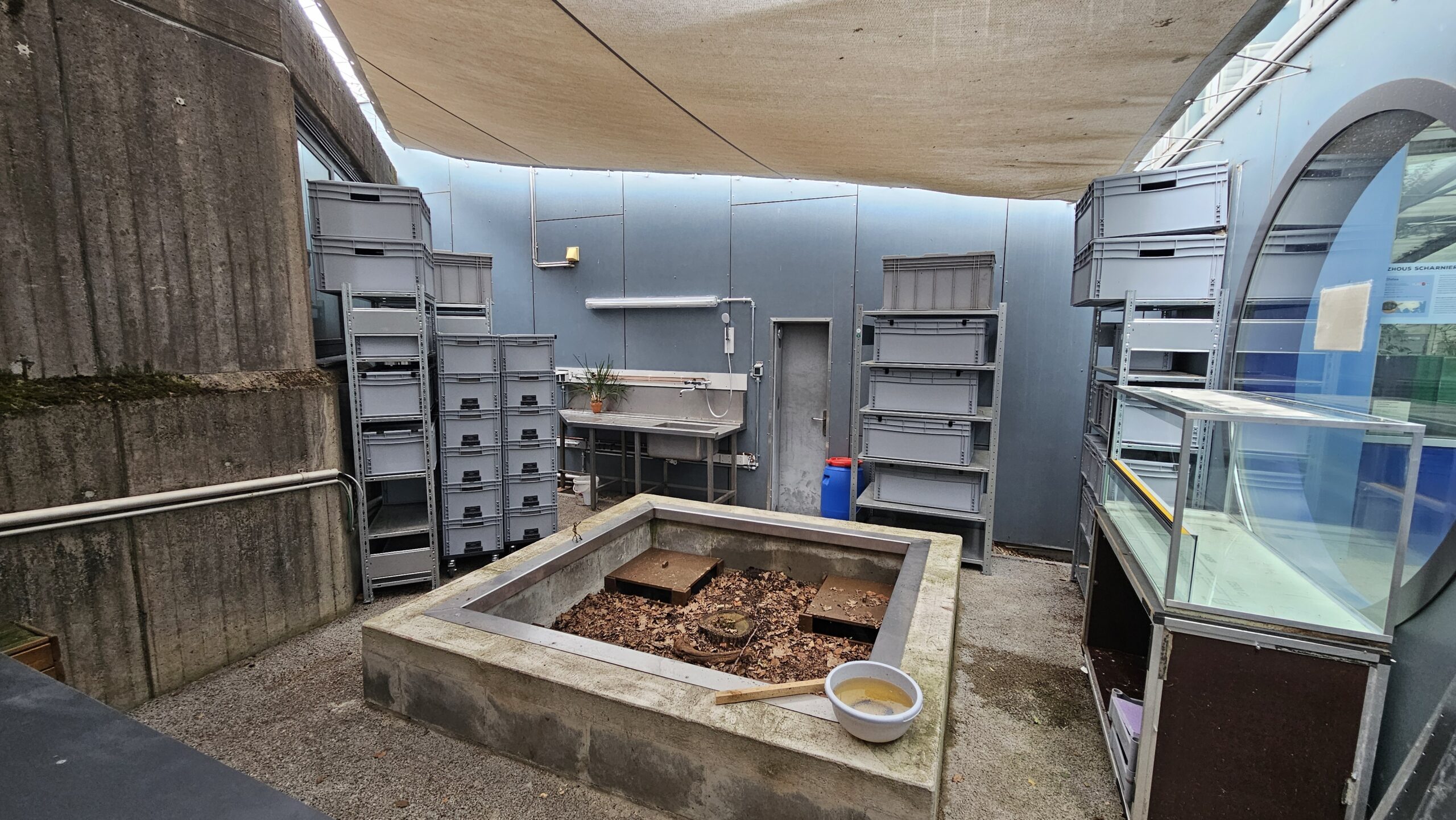
The Allwetterzoo is Establishing a Regional Conservation Breeding Program.
admin
Bsal has not yet reached Münsterland. However, if the pathogen reaches Münsterland, it could become critical for the fire salamander populations, as the fire salamander does not have a contiguous distribution area in Münsterland and the populations are sometimes very small-scale. If Bsal occurs here, an entire population can quickly be eradicated. Therefore, the Allwetterzoo, together with authorities and nature conservation organizations, wants to establish a reserve population. Supported by the waste management services in Münster. The facility will be visible to visitors, contains an area for overwintering, but also plastic crates suitable for salamanders and a display terrarium. This creates a tension between typical zoo terrariums that replicate habitats and breeding terrariums that are used for conservation breeding – and thus for housing around 60 individuals. To establish such a reserve population, animals are taken from nature. The first were collected as larvae in the Wolbecker Tiergarten after they spawned in a puddle in mid-November that threatened to dry out. Additionally, adult animals will be taken from nature this year. If necessary, the fire salamanders from November will be released back into the wild. However, the Allwetterzoo does not want to handle conservation breeding alone, as the animals should also be kept in cooperation with private keepers. This is also to minimize the risk of the entire reserve population being infected by a Bsal entry.
More information on the website of the Allwetterzoo Münster (German only).
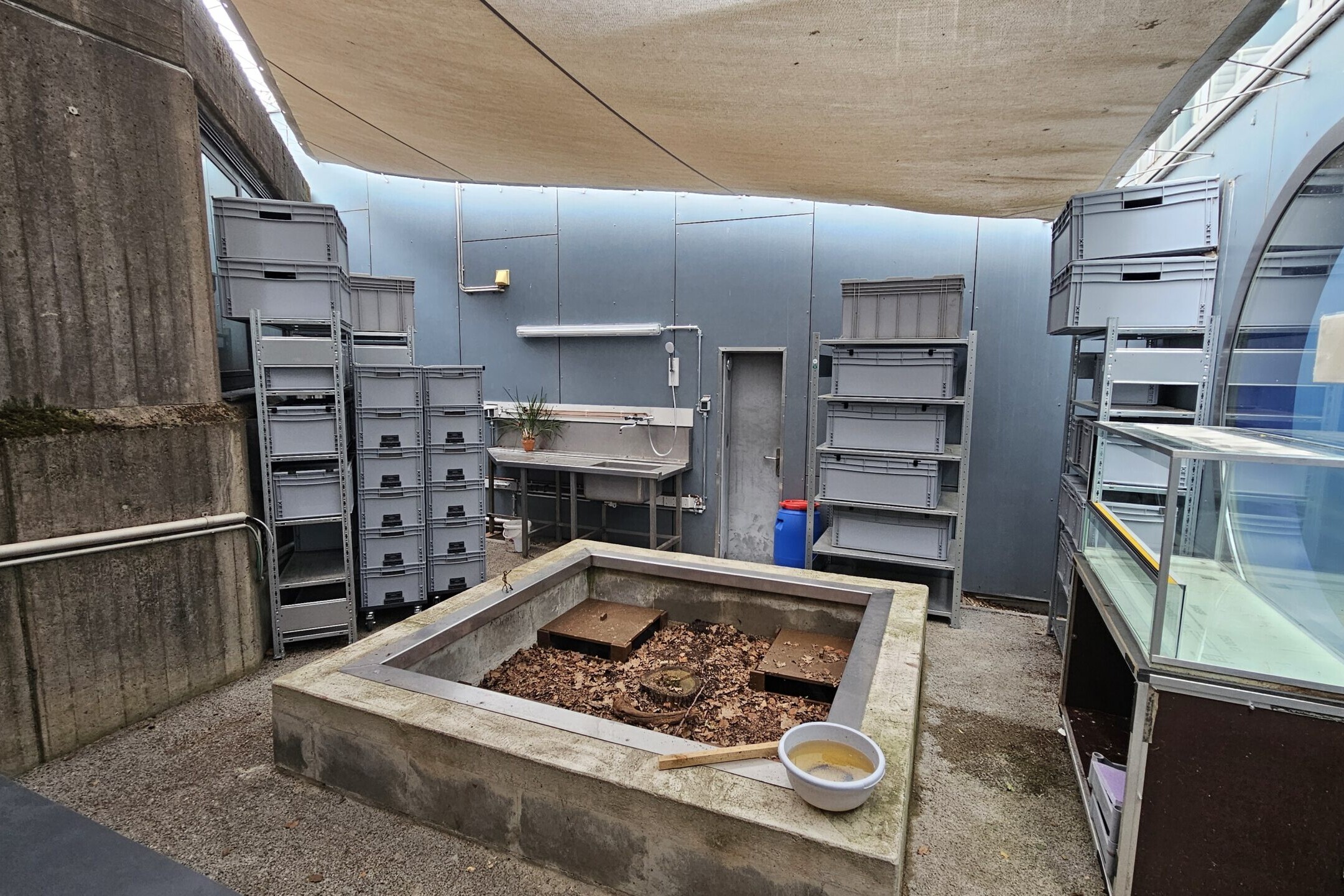
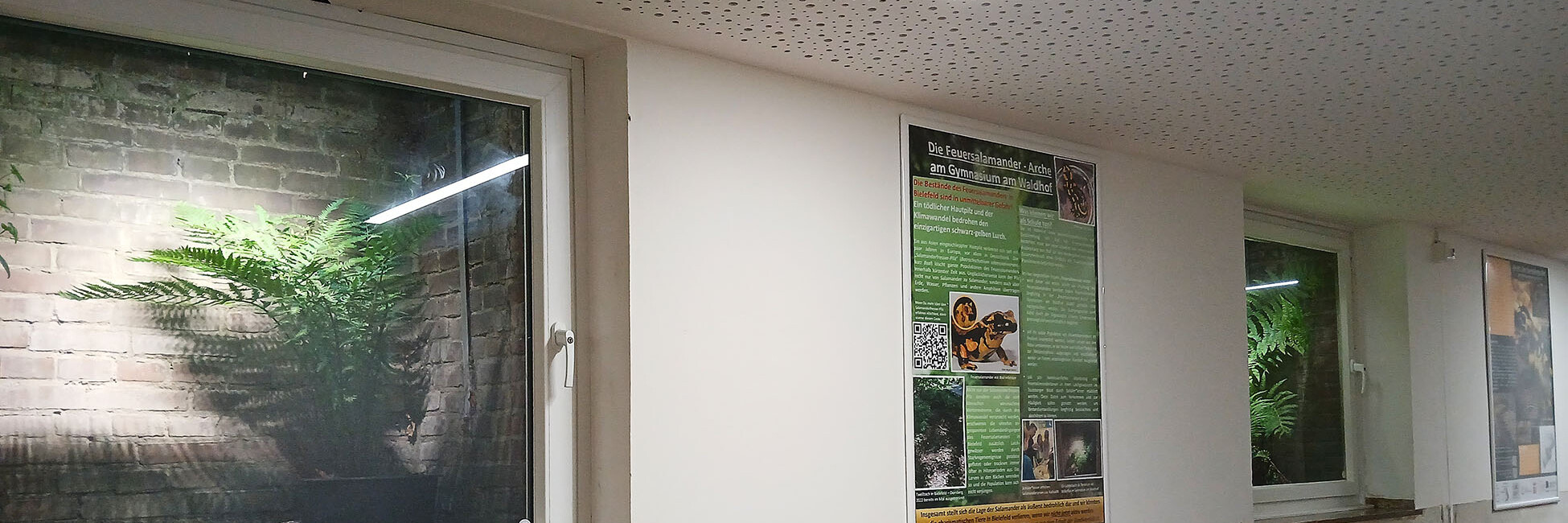
Breeding room for fire salamanders in the Alwetterzoo Münster